APU’s Marketing & Management students visited Selangor’s PJ Eco Recycling Plaza to see circular economy practices in action and learned how creative innovation converts everyday waste into valuable economic and community resources through hands-on activities like crushing glass into sand and making soap from waste cooking oil.
Image
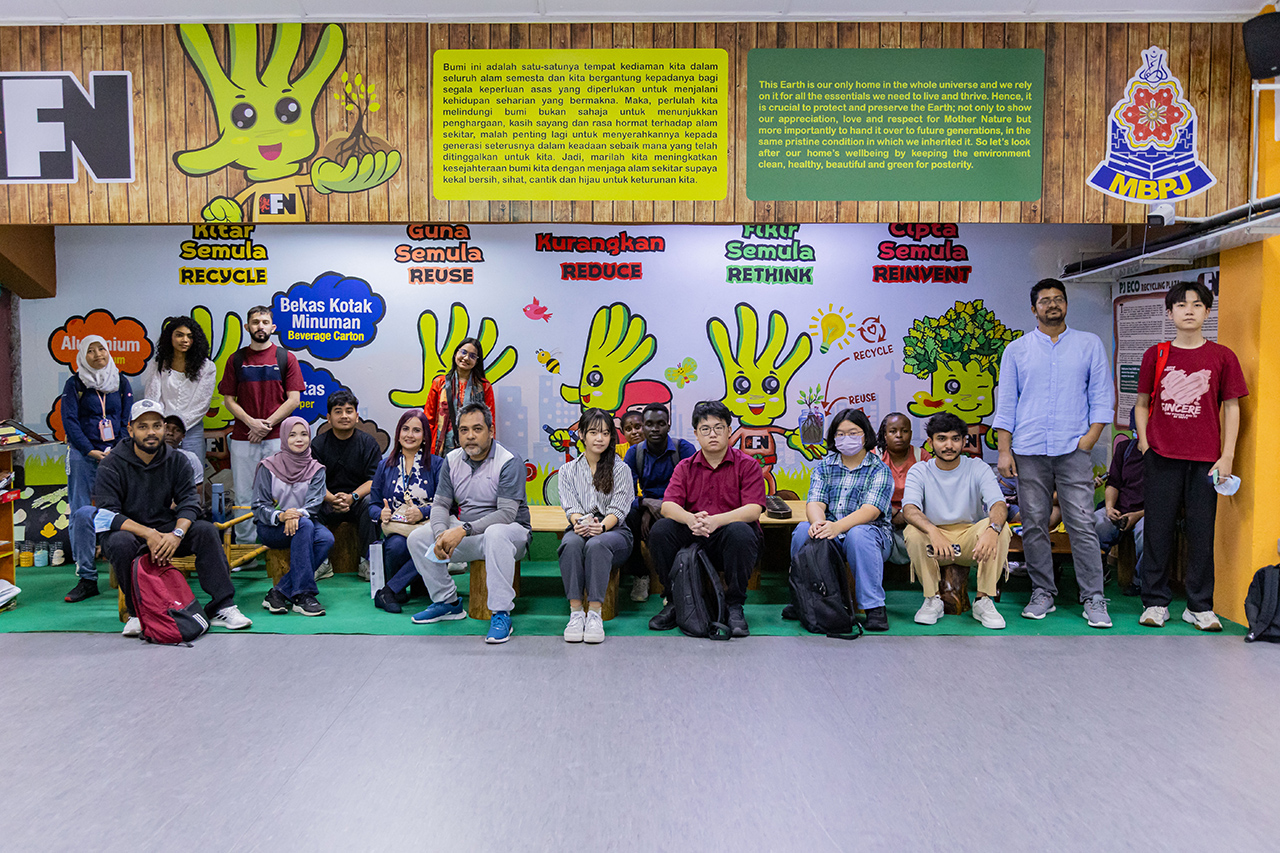
On Monday, 3 August 2026, Ms Harjinder Kaur, Senior Lecturer and Industry Advisory Panel Coordinator at Asia Pacific University of Technology & Innovation’s (APU) School of Marketing & Management (SoMM), led a lively group of undergraduate and postgraduate students directly into Selangor’s ultimate green playground: the PJ Eco Recycling Plaza.
Nestled within the bustling industrial landscape of the Sungai Way Free Trade Industrial Zone, the Plaza operates as a vibrant community hub dedicated to breathing new life into forgotten materials.
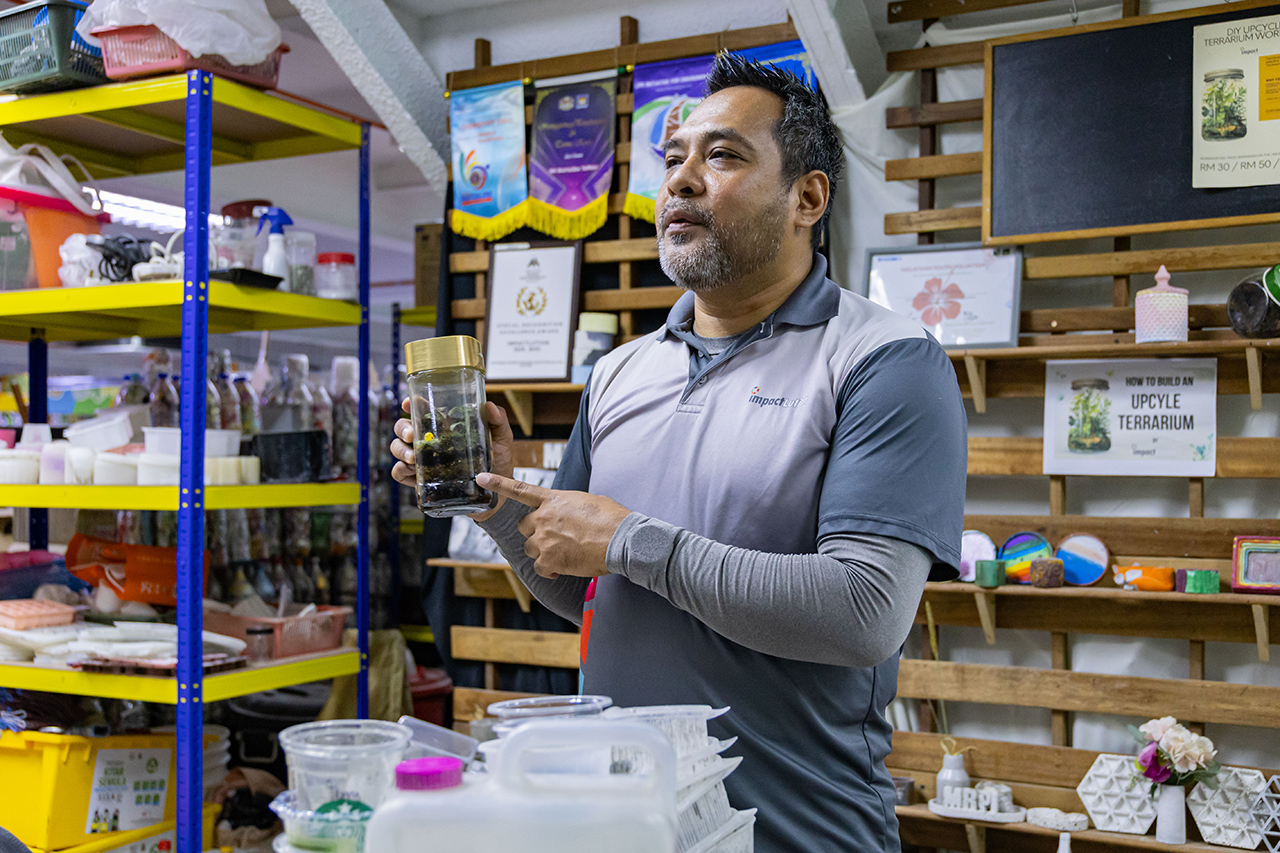
Hosting the delegation were two seasoned champions of green transformation — Ts Mohd. Faisal Abdur Rani, Certified Green Project Manager and Co-Founder of Impactlution, alongside his dynamic colleague, Ms Mas Nor Farahdayazie Ab Aziz.
Together, they set out to demonstrate that environmental stewardship is far more than a buzzword; it is an accessible, creative, and economically viable way of life.
The immersive journey began with a briefing by Ts Mohd. Faisal, who quickly challenged the students to reconsider their relationship with everyday rubbish.
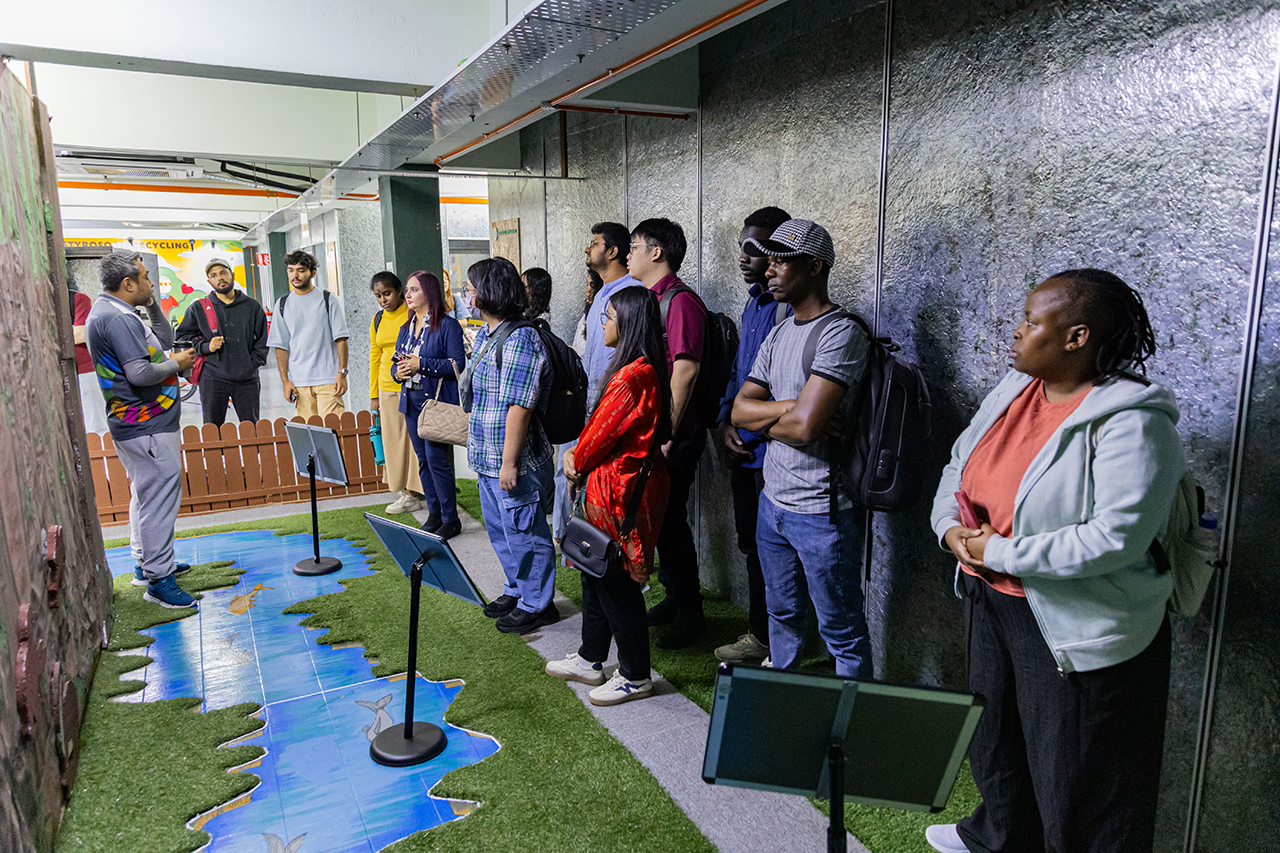
Before diving into the technical mechanics of processing waste, he grounded the discussion in fundamental ecological realities, introducing the core tenets of the circular economy.
The group then gathered around an interactive river ecosystem exhibit, a striking visual display that mapped the subtle, devastating pathways of urban pollution.
As students traced how carelessly discarded litter travels through stormwater drains and chokes local rivers, the abstract notion of water pollution suddenly hit home.
They witnessed firsthand how unmanaged waste destabilises aquatic biodiversity and directly threatens the health of nearby communities.
Aligning closely with the United Nations Sustainable Development Goal (SDGs) for Clean Water and Sanitation (SDG 6), the session drove home a sobering lesson that individual actions reverberate throughout entire ecosystems, inspiring attendees to rethink their daily habits.
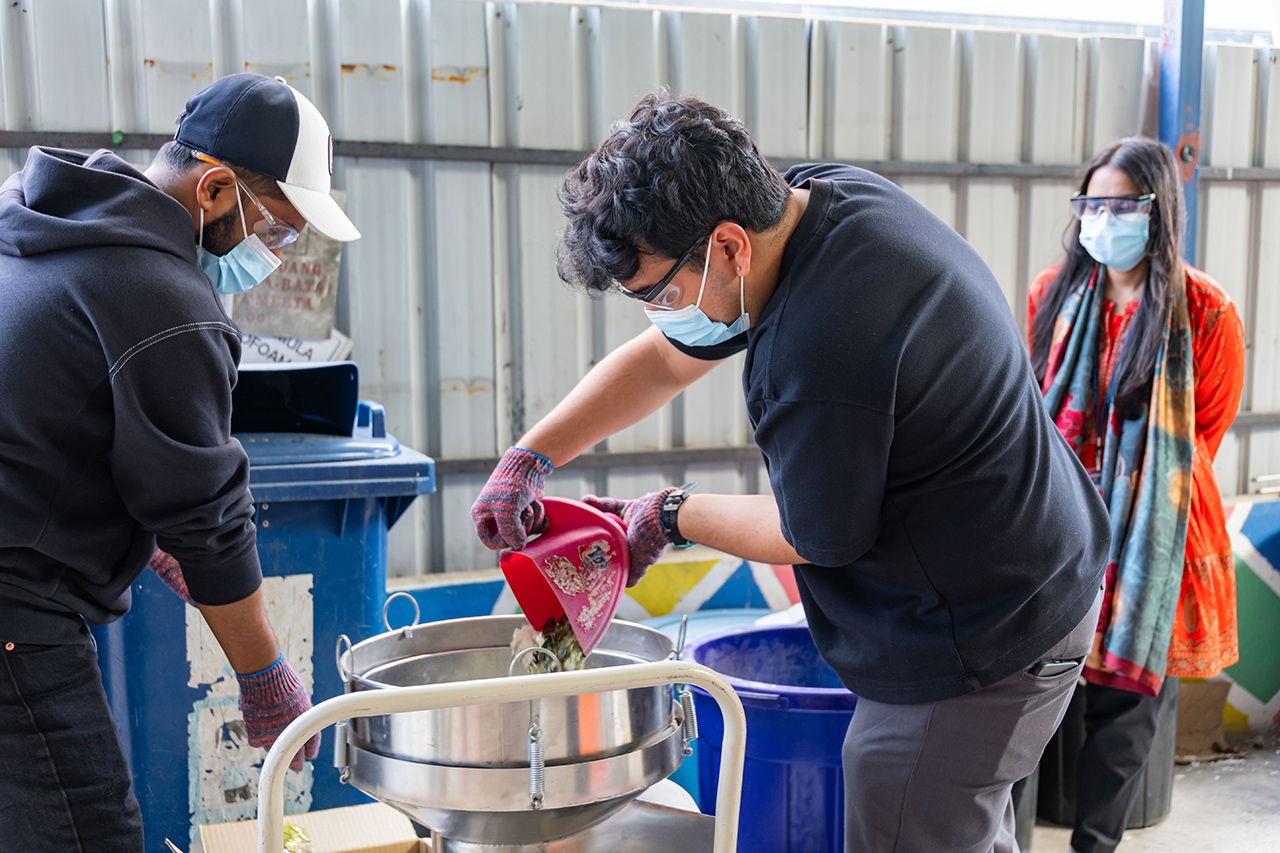
Theory swiftly gave way to tactile discovery at the Impactlution workstation, home to one of the day’s most electrifying activities: glass recycling.
Ts Mohd. Faisal ushered the group around a specialised industrial crushing unit, breaking down the mechanics of transforming rigid, hazardous glass bottles into fine, harmless sand.
Rather than merely watching from the sidelines, the students rolled up their sleeves, donned protective gear, and fed discarded wine and soda bottles directly into the roaring machine.
Within seconds, sharp edges were obliterated, yielding a smooth, granular material ready for reuse in community construction and landscaping projects.
This exhilarating exercise offered a vivid demonstration of SDG 12: Responsible Consumption and Production. By diverting tons of glass away from overflowing landfills and converting it into a versatile asset, the demonstration brought the essence of resource recovery to life.
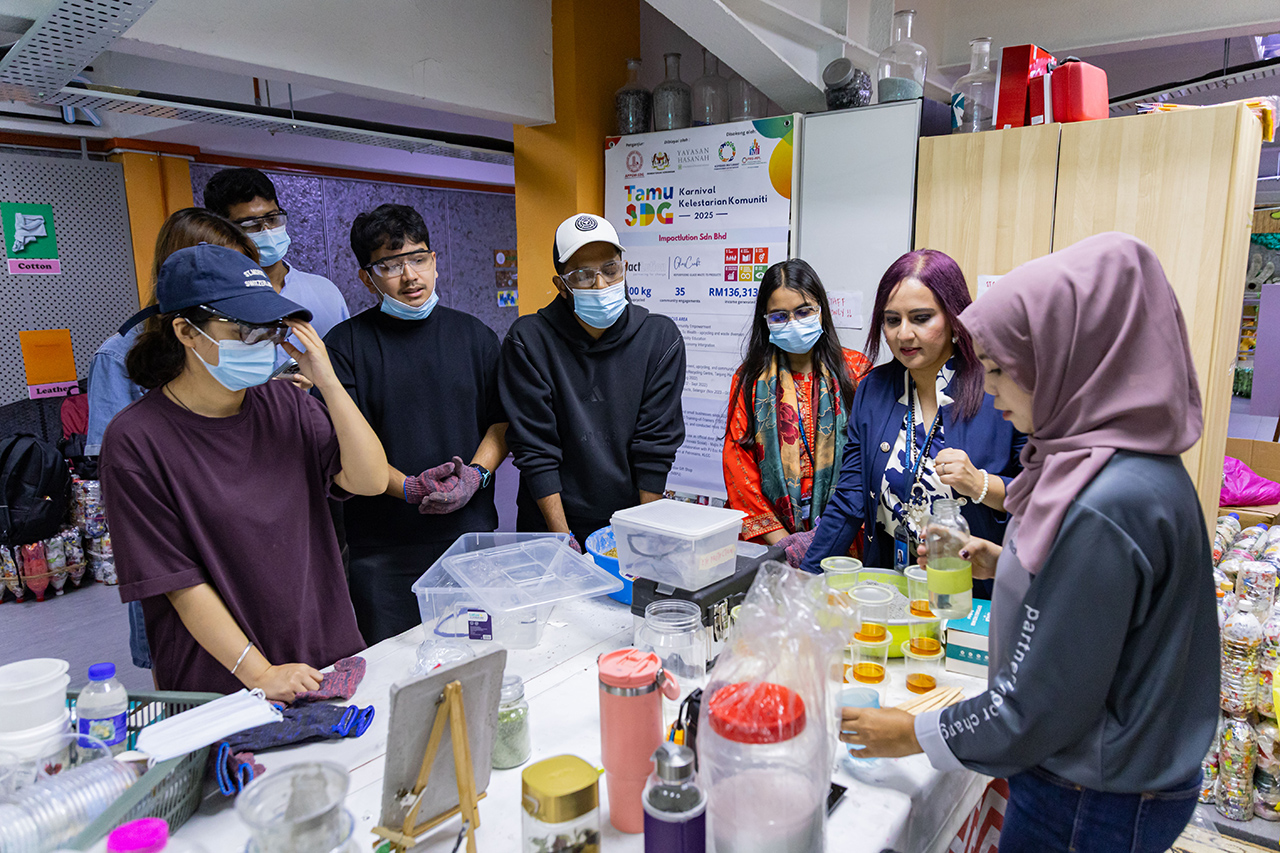
The group then moved to a laboratory-style setup hosted by Ms Mas Nor Farahdayazie, who introduced an ingenious culinary conversion: turning rancid, used cooking oil into high-grade, eco-friendly soap.
Ms Mas Nor Farahdayazie highlighted the severe ecological damage caused when households and restaurants pour spent oil down the drain — a major culprit behind clogged municipal sewers and toxic river slicks.
She then walked the group through the chemical process of saponification, converting greasy culinary waste into fragrant, usable household bars.
The demonstration fired up the business-minded cohort, proving that green innovation sits at the exact intersection of ecological preservation and commercial opportunity, serving as yet another practical nod to SDG 12.
The final leg of the tour brought the group to the colourful studios of Hara Makers, a collective renowned for turning discarded rubbish into designer goods.
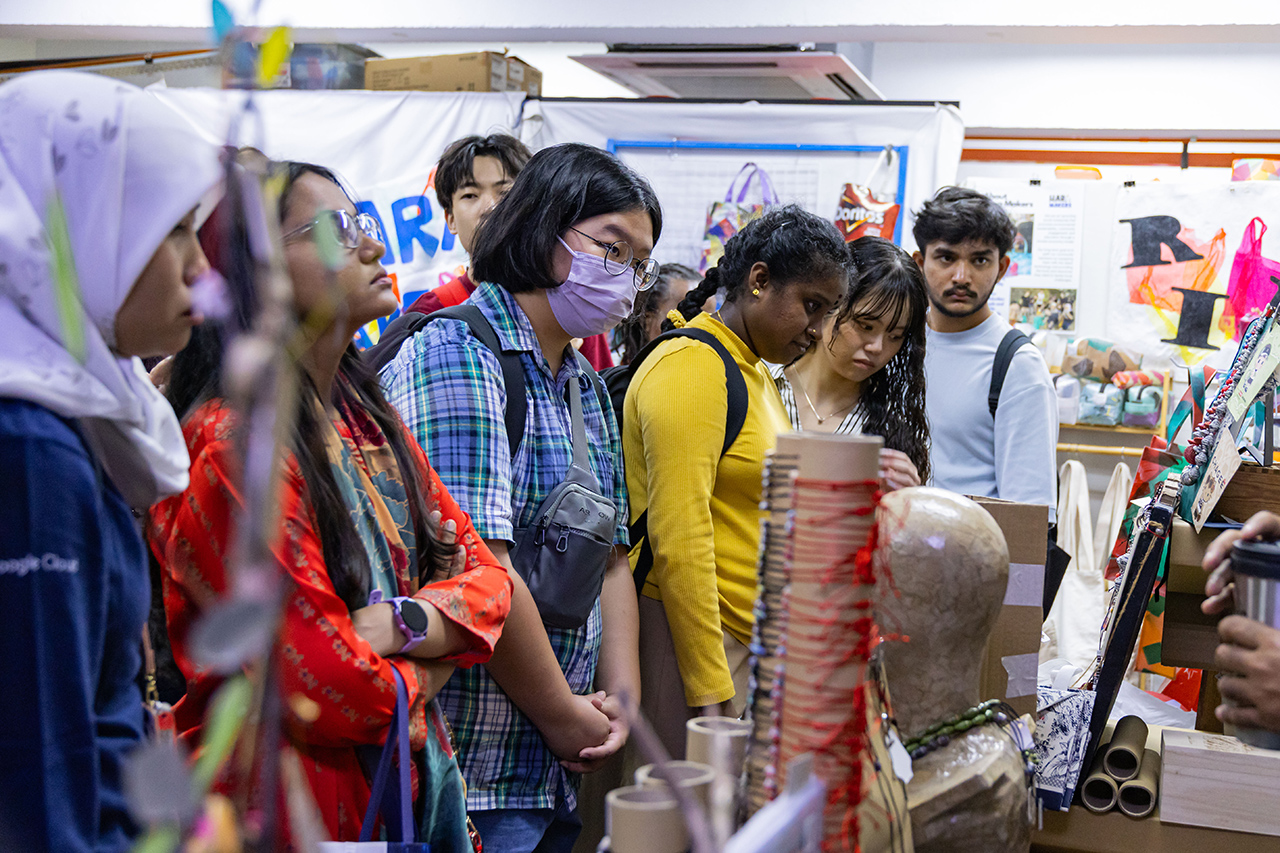
Here, students marvelled at shelves lined with stylish totes, home décor, and functional accessories — all crafted from post-consumer plastics, offcut fabrics, packaging foils, and paper waste.
This showcase perfectly embodied SDG 9: Industry, Innovation and Infrastructure, illustrating how clever design and nimble business models can dramatically extend material lifecycles while generating fresh economic avenues for local artisans.
Across these three distinct stations — from Impactlution’s glass-to-sand conversion to the eco-soap processing and Hara Makers' upcycled fashion — the students gained a comprehensive blueprint of how diverse waste streams can be systematically diverted back into the supply chain.
The trip left an indelible mark on the participants, who warmly reflected on the experience.
Muhammad Masvood Abdullah, an Artificail Intelligence (AI) and Business Analytics student, shared that observing how different types of waste are sorted and processed helped the group better understand the importance of responsible management and how small actions contribute to a greener future.
Citra Ayu Pritiwi, a Digital Marketing student, added that seeing waste converted into useful products showed her that sustainability is not just about protecting the environment, but also about creating concrete opportunities for communities.
Added this enthusiasm, her peer Aida Aurora Madope Mangue shared how inspiring it was to witness materials that are usually discarded converted into valuable household goods through sheer creativity and sustainable thinking.
Summarising the spirit of the day, Ms Harjinder Kaur concluded that immersive industry engagements are vital for contextualising classroom concepts.
She stressed that direct interaction with passionate practitioners empowers students to become responsible, forward-thinking leaders capable of driving genuine societal change.
As the buses pulled away from PJ Eco Recycling Plaza, the students carried home far more than academic notes.
They departed with refreshed mindsets, a deeper commitment to green living, and a clear vision of a world where waste is no longer an endpoint, but a valuable new beginning.
News & Happening
Download e-Brochures
Intake Calendar
Want to know more ?
Let’s Connect