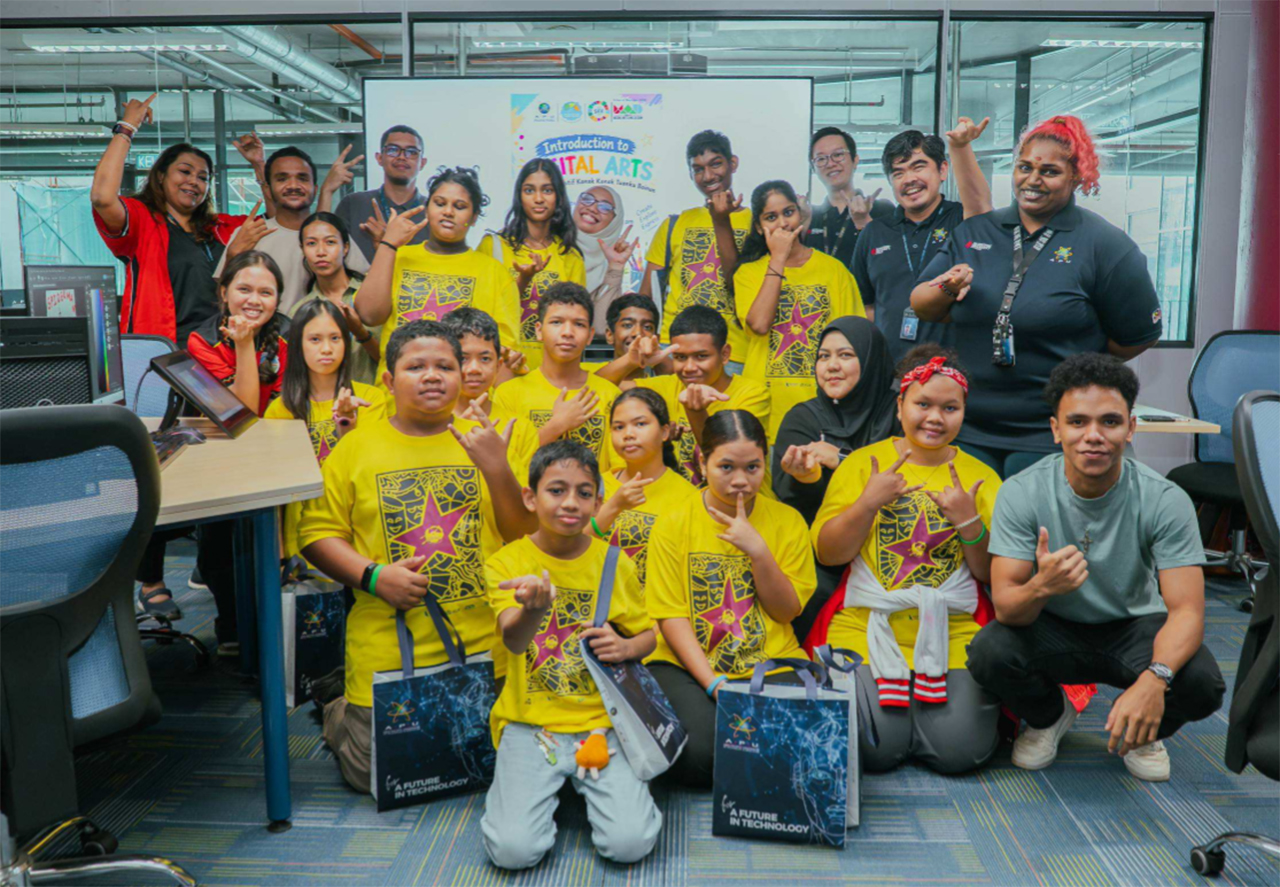
Recently, the School of Business (SoB) and School of Media, Arts, and Design (SoMAD) at Asia Pacific University of Technology & Innovation (APU), in collaboration with Pusat Kreatif Kanak-Kanak Tuanku Bainun, organised a workshop titled “Introduction to Digital Arts” for children (under Pusat Kreatif Kanak-Kanak Tuanku Bainun).
Coordinated by Ms Cynthia Mala Paul Dorairaj (Lecturer, SoB at APU) and Ts Ong Tee Chuan (Lecturer, SoMAD at APU), the workshop provided the children with an opportunity to explore digital arts through hands-on activities; introducing many of them to digital learning devices and creative tools for the first time, while encouraging new forms of creative expression and learning, aligning with Sustainable Development Goal 4, 9, 10, and 17 (SDG 4, SDG 9, SDG 10, and SDG 17).
Turning Curiosity into Digital Creativity
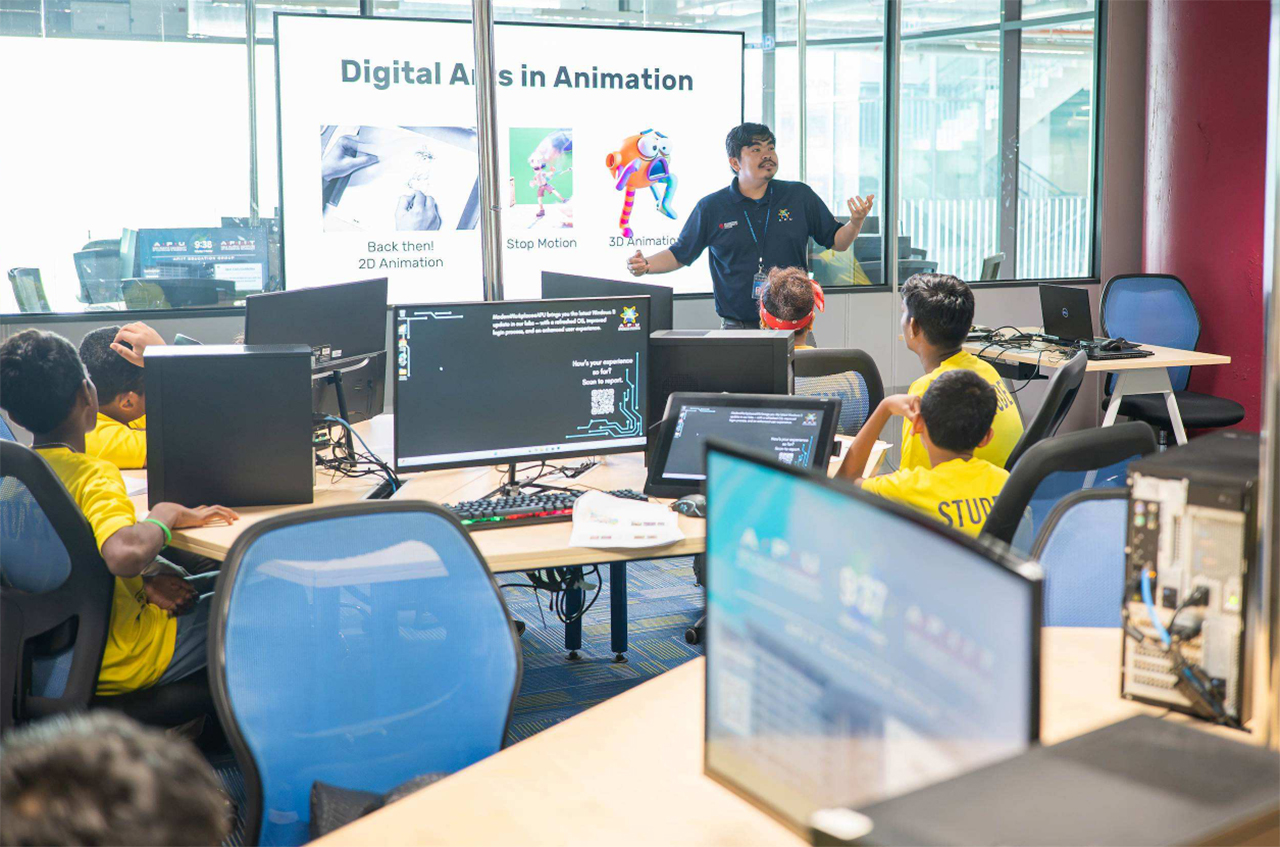
The workshop was led by Mr Wan Dinie Izzat Wan Arifin (Lecturer, SoMAD at APU), with support from Ms Nithyadevi Ganesan (Lecturer, SoMAD at APU) and Ts Ong as Co-Instructors.
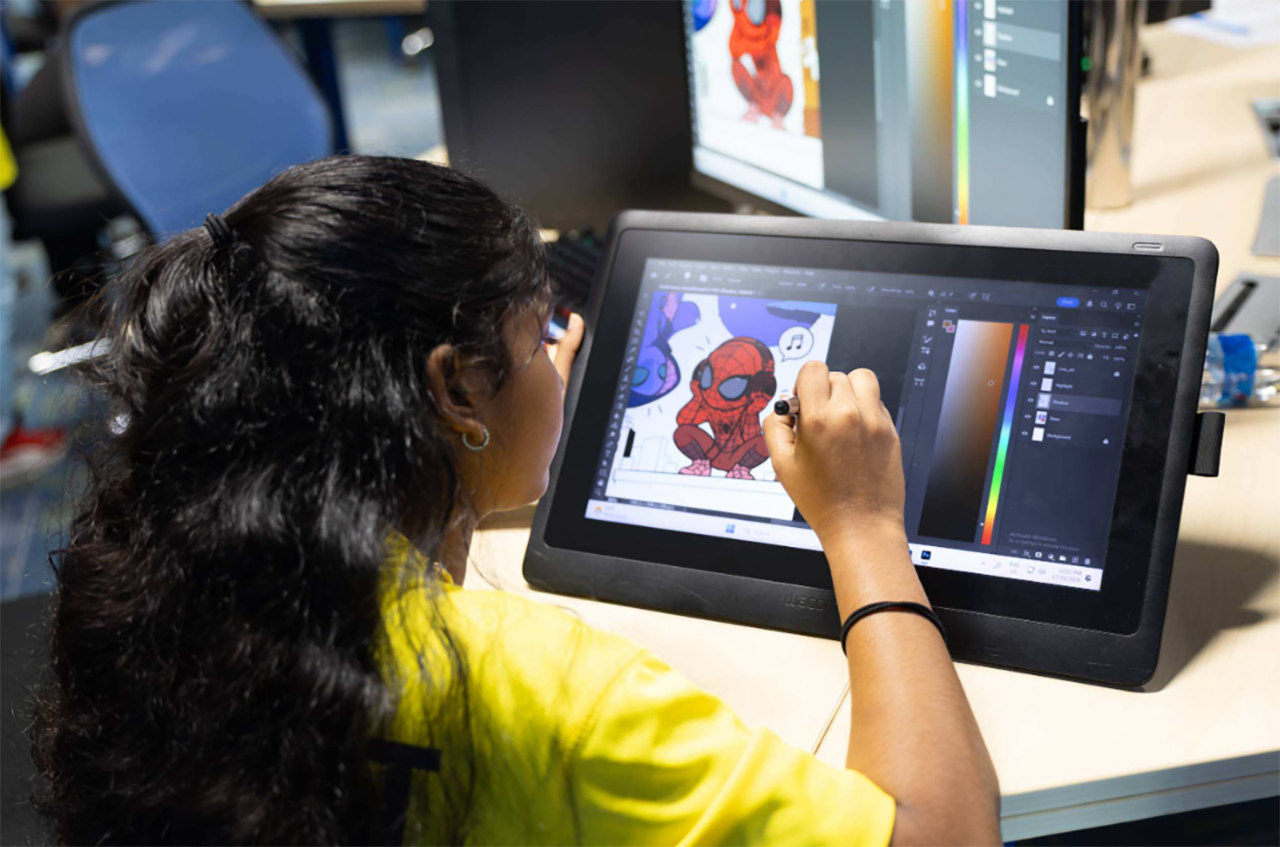
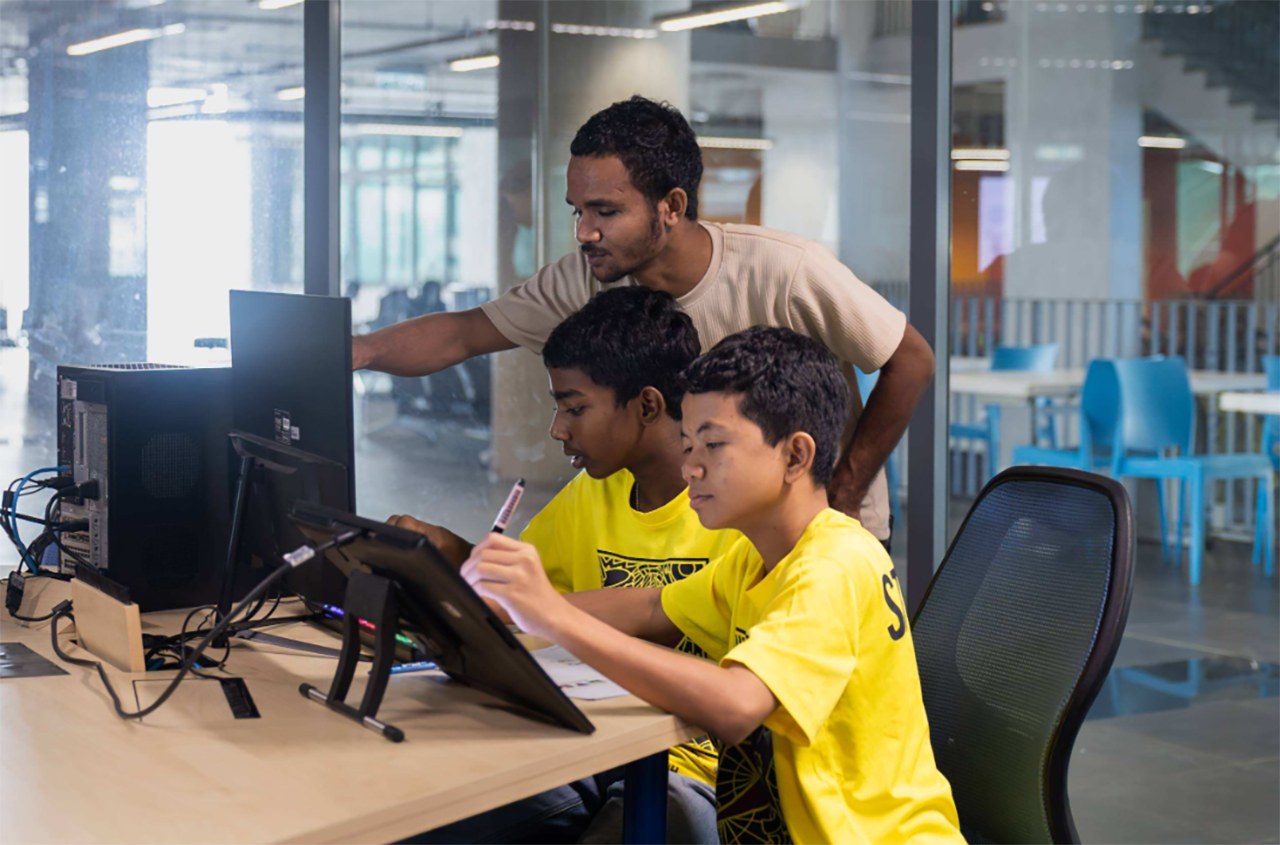
Through demonstrations, guided practice, and interactive activities, the children were introduced to the fundamentals of digital arts; including visual design, creative expression, and the use of digital tools to develop their ideas.
Building on these activities, the children were encouraged to experiment with unfamiliar tools, explore their imagination, and express their ideas through digital mediums.
As they became more familiar with the devices, they grew increasingly comfortable experimenting with different ideas and sharing their creative work.
This gradual introduction to digital creativity also allowed the children to discover an area that was new to many of them; giving them the opportunity to consider how digital arts could become part of their future interests.
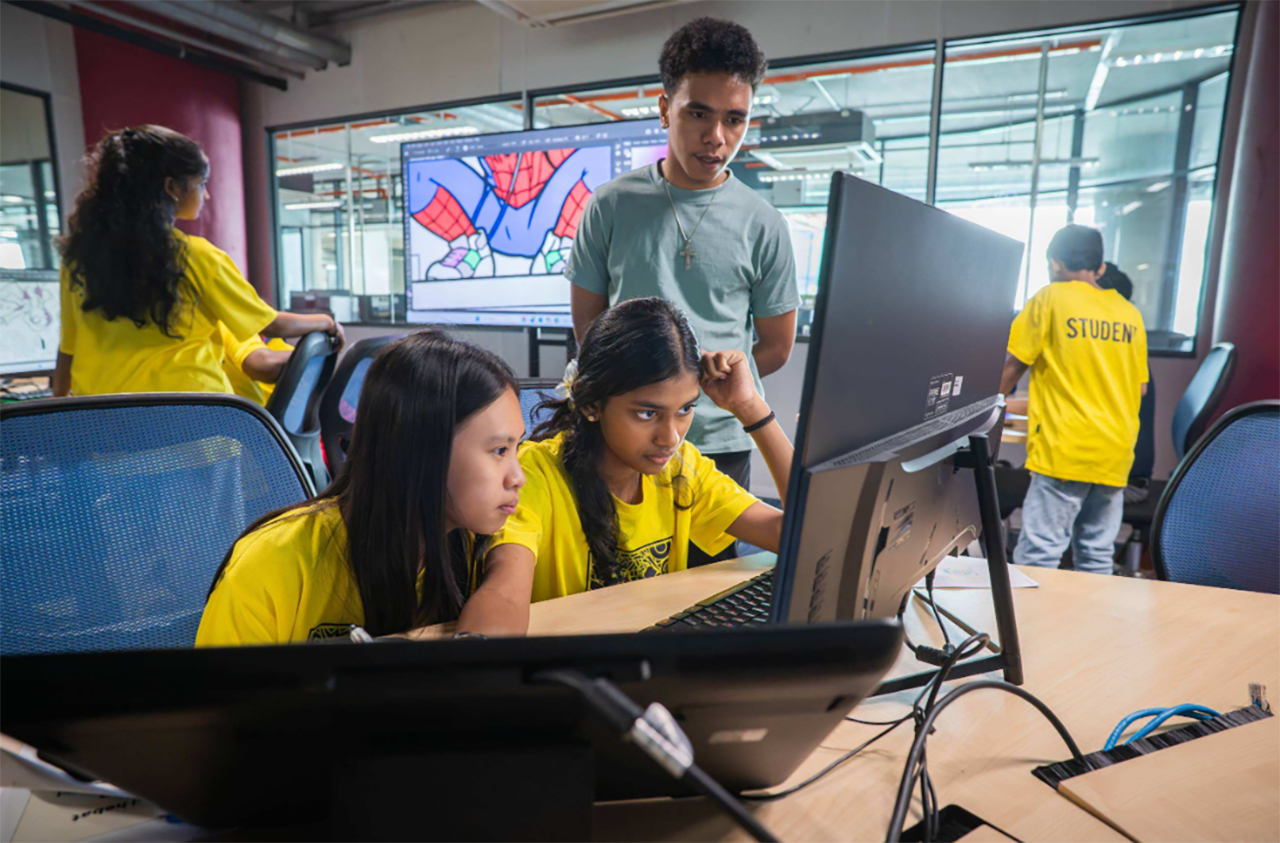
To support the children throughout this learning process, APU student volunteers were present to provide guidance, respond to their questions, and encourage them as they worked through the activities.
By working closely with the children, the student volunteers were able to strengthen their communication, patience, empathy, teamwork, and leadership skills, while learning how to engage with young participants from different backgrounds.
The interaction therefore created a shared learning experience, where the children gained confidence in exploring digital creativity, while APU student volunteers developed their ability to guide and support others within a community setting.
Celebrating the learning Experience
The workshop concluded with the presentation of goodie bags and refreshments contributed by the Soroptimist International Club of Shah Alam; providing a cheerful and memorable ending to the children’s learning experience.
These thoughtful contributions complemented the workshop by providing the children with additional materials and interactive activities that encouraged creativity, problem-solving, and continued learning beyond the session.
Student Perspective
- Orlando Rosario De Fatima Neno: “The workshop was a rewarding experience for me, as i was able to see the children enjoy themselves, interact with one another, and express their creativity, while also having the opportunity to support them throughout the activities, engage with them through the learning process, and witness their excitement, as they explored something new.”
Strengthening Community Partnerships through Education
More than an introduction to digital arts, the workshop provided the children with a space to explore, experiment, and discover what they could create using digital tools.
For APU student volunteers, instructors, and community partners, it reinforced the role that shared knowledge and collaboration can play in supporting young learners.
Ms Cynthia shared that the workshop demonstrated the importance of creating opportunities for children to explore unfamiliar areas of learning in a supportive environment.
“Seeing the children progress from initial uncertainty to greater confidence as they explored the digital devices was one of the most rewarding aspects of the workshop.
“The experience showed how educational partnerships can be translated into practical community activities that give children the opportunity to discover their abilities, while also allowing university students to contribute through their knowledge, time, and involvement,” she said.
News & Happening
Download e-Brochures
Intake Calendar
Want to know more ?
Let’s Connect