Through a five-day research fellowship at Kyoto University of Advanced Science (KUAS), APU explored how Extended Reality (XR) technologies could transform environmental research and education, while opening avenues for joint research, academic exchanges and international collaboration that could benefit students and researchers at both universities.
Image
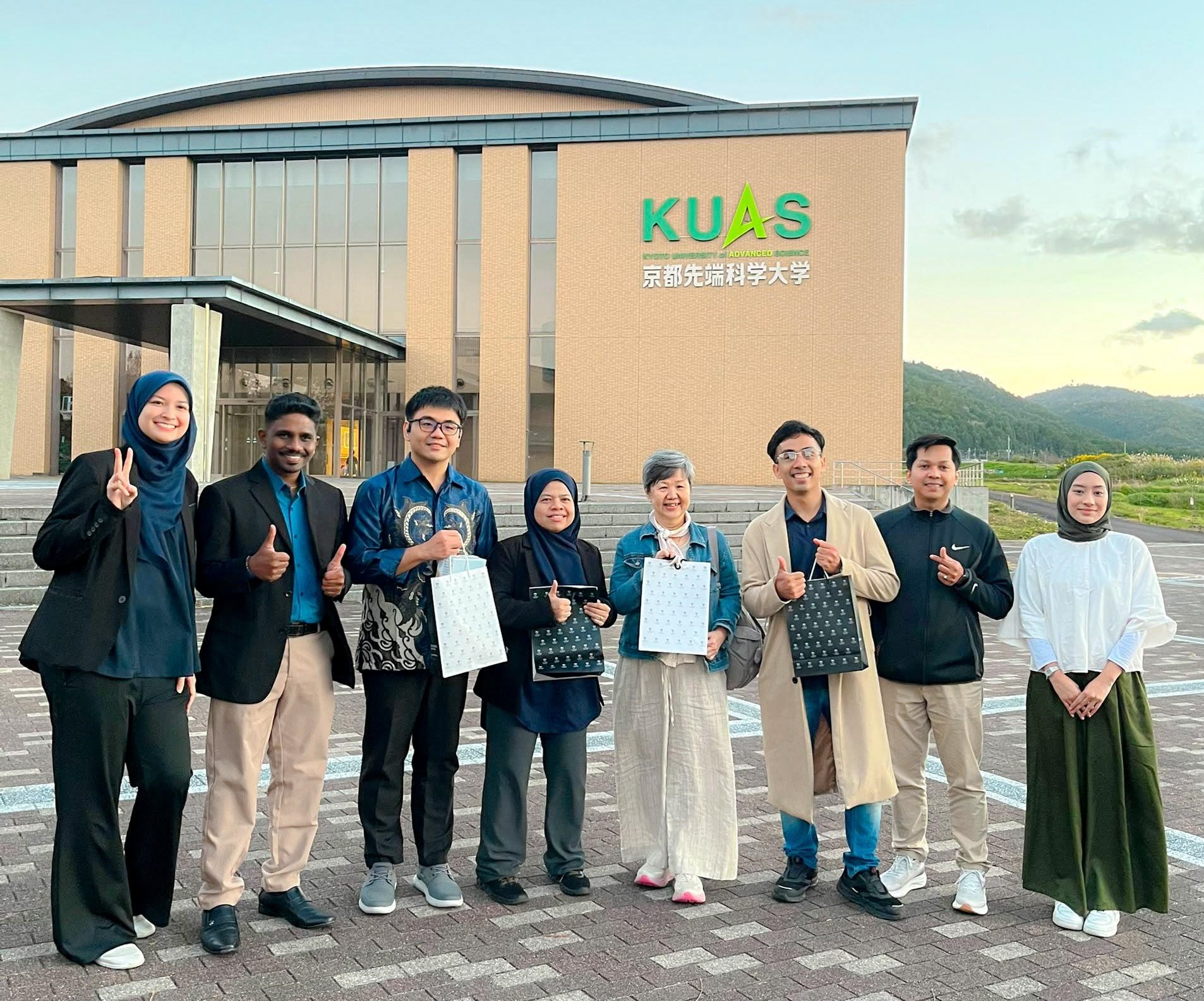
What if researchers could visualise moisture beneath a forest floor, track coral larvae drifting through the ocean, or identify urban heat hotspots before developing climate resilience strategies?
These possibilities formed the centrepiece of a five-day research fellowship undertaken by Ts Dr Siti Azreena Binti Mubin, Assistant Professor and XR Studio Lead at Asia Pacific University of Technology & Innovation (APU), at Kyoto University of Advanced Science (KUAS) in Japan, from 26 to 30 October 2026.
Representing APU and its XR Studio, Dr Siti Azreena visited KUAS to explore research collaboration at the intersection of immersive technology and environmental science, bringing together complementary expertise from both institutions.
A highlight was her public lecture, “Extended Reality Technology in Environmental Science”, delivered on 28 October at KUAS's campus in Kameoka, Kyoto Prefecture.
The session attracted approximately 50 participants, including academics, researchers, postdoctoral fellows, PhD students, international programme students and representatives from KUAS's International Collaboration Office.
Bringing Environmental Research into Virtual Worlds
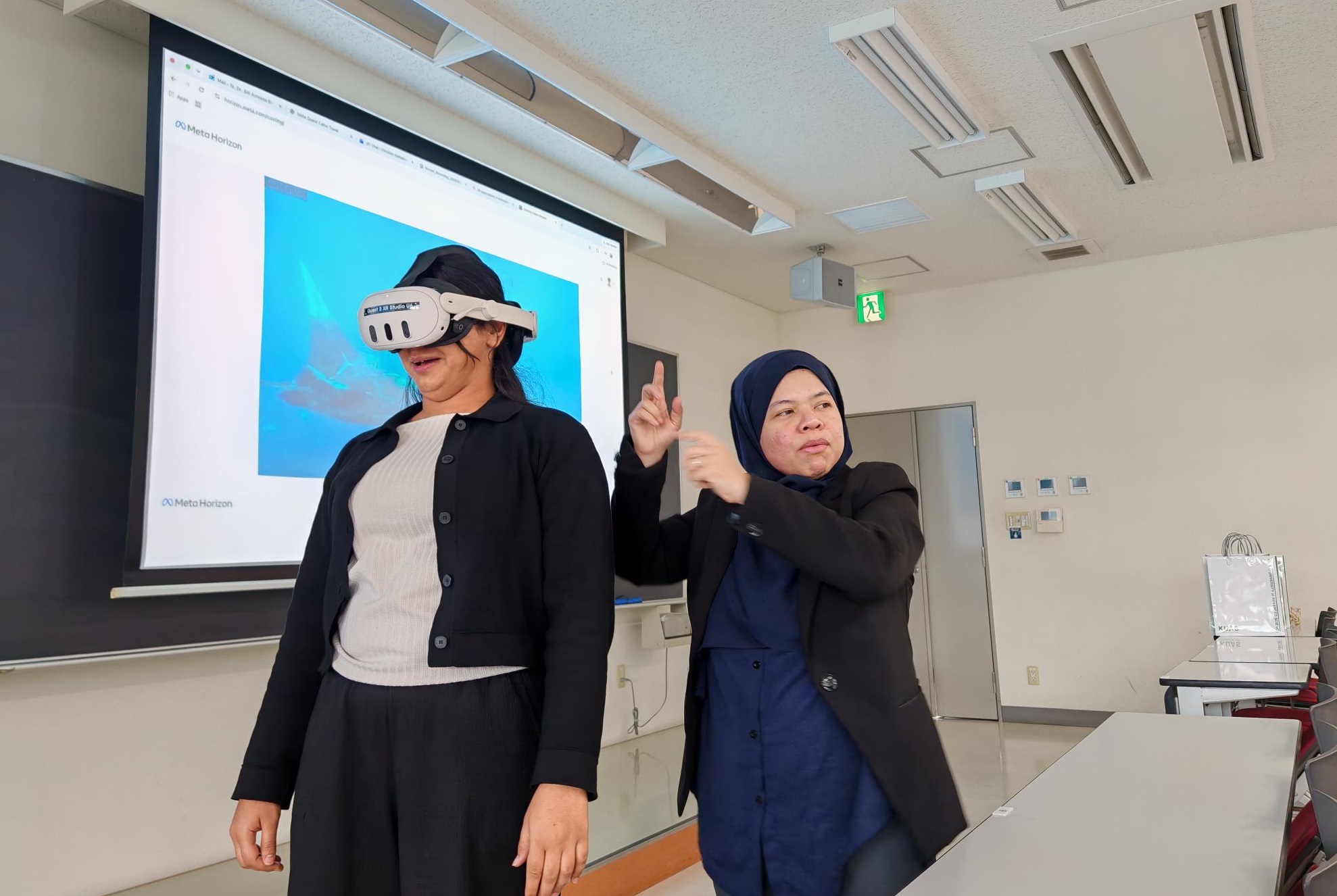
Moving beyond conventional presentations, Dr Siti Azreena demonstrated how XR could help scientists explore environmental challenges through interactive, three-dimensional experiences.
Among the applications discussed were simulations of coral larval drift to support marine restoration, underground soil moisture visualisations for forestry research, and virtual models identifying urban heat hotspots.
She also introduced digital twins integrating sensor, satellite and drone data; augmented reality (AR) for citizen science; and virtual fieldwork that could reduce travel-related emissions.
Other possibilities included immersive environmental datasets, public consultations on ecological planning and virtual testing of restoration strategies.
Through VR demonstrations and videos of projects developed at APU XR Studio, participants gained insights into how immersive technologies could make complex scientific information more accessible to researchers, students and communities.
“The audience showed considerable interest in XR technology and were particularly surprised by its potential applications in environmental science, especially in research and education,” Dr Siti Azreena shared.
She recalled an engaging discussion about the security and privacy implications of wearable XR devices, particularly Meta Ray-Ban smart glasses, highlighting the importance of responsible technology deployment.
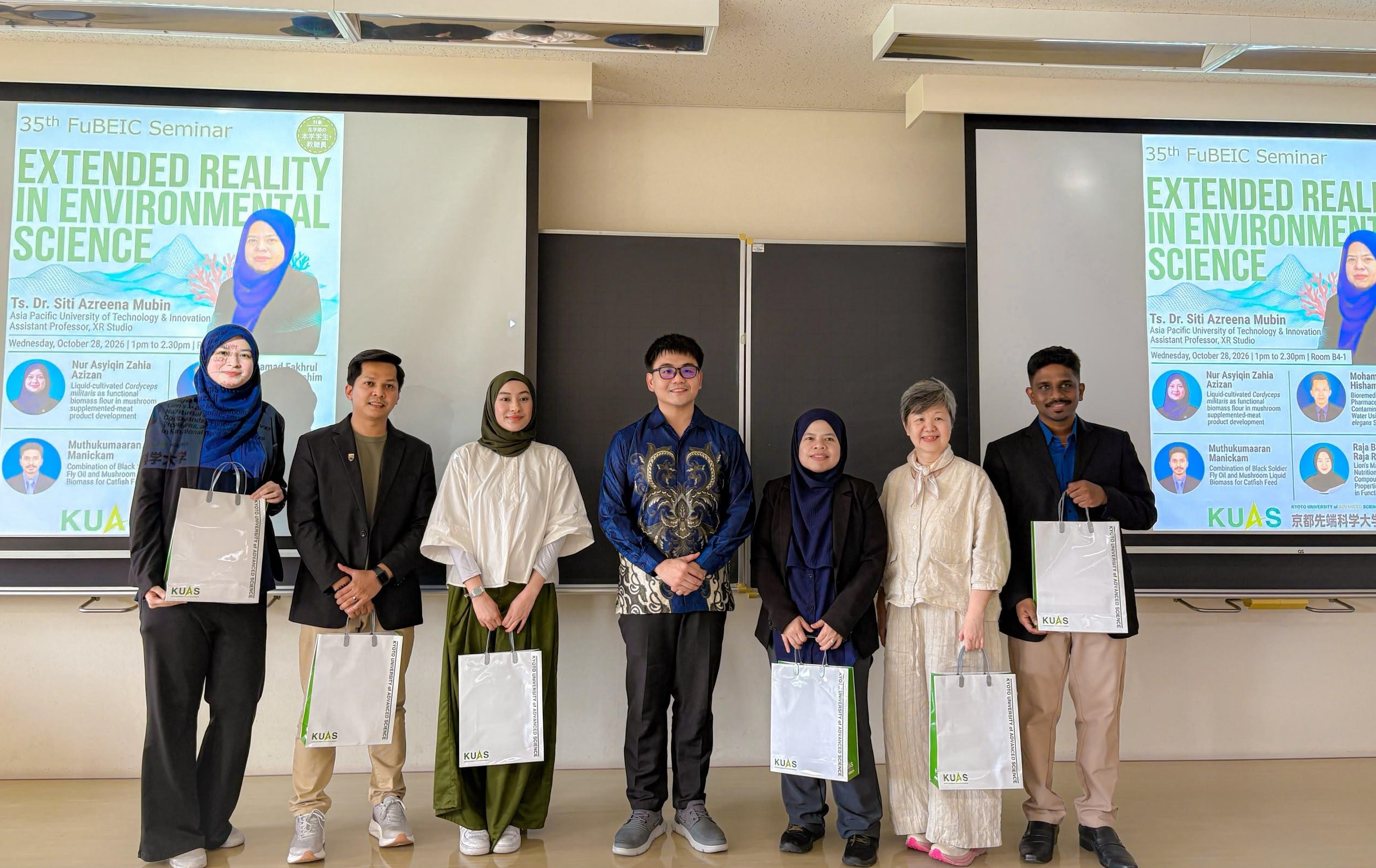
The seminar also featured research presentations by four postgraduate students from Universiti Malaya (UM): Nur Asyiqin Zahia Azizan, Muthukumaaran Manickam, Mohamad Fakhrul Hisham bin Hashim and Raja Balqis Binti Raja Razali.
The delegation was invited by Assoc Prof Dr Yong Jie Wong, an academic from KUAS's Department of Environmental and Bioresource Sciences, Faculty of Bioenvironmental Science, and a UM alumnus.
Finding Common Ground for Research Partnerships
Beyond the lecture, the fellowship provided an opportunity to explore KUAS's laboratories, research facilities and ongoing scientific projects.
Discussions covered potential joint research, academic mobility, student exchanges and joint supervision, alongside opportunities to integrate XR into KUAS's environmental research.
According to Dr Siti Azreena, KUAS was selected for its expertise in water quality, environmental modelling, Geographic Information Systems (GIS), remote sensing and biodiversity conservation.
These strengths complement APU XR Studio's interdisciplinary capabilities and align with APU's International Research Network (IRN) initiative, which identifies Japan as a target country for research partnerships.
Particularly intriguing were KUAS's studies involving mangrove ecosystems, mushrooms in food systems and otter conservation.
Dr Siti Azreena identified opportunities to apply XR in these areas, from visualising ecological processes to creating interactive educational experiences that could improve public understanding and stakeholder engagement.
From Research Exchange to Joint Opportunities
The fellowship also laid the groundwork for longer-term academic engagement.
Both institutions explored co-authored journal publications, matching research grants, joint supervision and summer programmes that could create international learning opportunities for researchers, academics and students.
An immediate priority is developing a joint matching research grant proposal. KUAS is also considering organising a summer programme at APU's campus, offering another potential platform for academic exchange.
If realised, these initiatives could enable students to engage with international researchers, experience different research environments and contribute to projects combining environmental science with emerging digital technologies.
For APU, the prospective partnership represents an opportunity to expand its XR research capabilities while strengthening international connections that support interdisciplinary innovation.
“This fellowship reinforced that meaningful XR innovation is driven by global collaboration and shared expertise. It opens new opportunities for APU XR Studio to create research with greater impact and international reach,” concluded Dr Siti Azreena.
News & Happening
Download e-Brochures
Intake Calendar
Want to know more ?
Let’s Connect