Course Details


Why choose APU?


Latest Technologies
More Than Just A Computer Science Degree
APU's Bachelor of Science (Honours) in Computer Science with a specialism in Quantum Computing degree is designed to provide you an edge with the latest technologies that are in line with the Industrial Revolution 4.0.

Requirements
Admission Requirements
2 Passes in STPM in Science stream with minimum Grade C (GPA 2.0) in Mathematics and one Science or ICT Subject.
OR
2 Passes in STPM with minimum Grade C (GP 2.0) in any subject with a credit in Additional Mathematics at SPM.
OR
- 2 Passes in STPM with minimum Grade C (GP 2.0) in any subject with a credit in Mathematics and any one Science or ICT subjects at SPM.
Note: Candidates need to do a Pre-Requisite module in Further Mathematics or equivalent in the first semester of Degree Programme.
2 Passes (Grade A-D) in A-Level in Science stream with a Pass in Mathematics and one Science or ICT subject.
OR
2 Passes (Grade A-D) in A-Level with a Credit in Additional Mathematics at SPM/ O-Level/ IGCSE or equivalent.
OR
2 Passes (Grade A-D) in A-Level with a Credit in Mathematics and Science or ICT subjects at SPM/ O-Level/ IGCSE or equivalent.
*Overseas qualification that are equivalent to 12th Grade/A Level/HSC are accepted.
Note: Candidates need to do a Pre-Requisite module in Further Mathematics or equivalent in the first semester of Degree Programme.
- 5 Grade B Passes in UEC in any subject including Mathematics and one Science or ICT subject.
- 5 Grade B Passes in UEC in any subject including Additional Mathematics.
- 5 Grade B Passes in UEC in any subjects with Credit in Mathematics and Science or ICT Subject at SPM or equivalent.
Note: Candidates need to do a Pre-Requisite module in Further Mathematics or equivalent in the first semester of Degree Programme.
- A pass in Matriculation or Foundation studies with minimum CGPA of 2.0 with a Credit in Additional Mathematics at SPM/IGCSE/O-Level or its equivalent.
Note: The requirement for the Additional Mathematics can be exempted if the Matriculation or Foundation offers Mathematics module which is equivalent or higher requirement than the Additional Mathematics at SPM level.
OR
- A pass in Matriculation or Foundation studies with minimum CGPA of 2.0 and a Credit in Mathematics and Science or ICT subject at SPM/IGCSE/O-Level or its equivalent.
Note: Candidates need to do a Pre-Requisite module in Further Mathematics or equivalent in the first semester of Degree Programme.
- Diploma with a minimum CGPA of 2.75.
Note: Student with CGPA above 2.0 and below 2.5 may be accepted using rigorous assessment conducted by APU and subject to the approval of the Academic Board.
Any qualification that APU accepts as equivalent to the above.
The above entry requirements may differ for specific programmes based on the latest programme standards published by Malaysian Qualifications Agency (MQA). The qualification and entry requirements for the programmes will be determined based on the "Comparison List of Equivalency of International Qualifications with SPM (O-Levels equivalent) and STPM (A-Levels equivalent)" published by Malaysian Qualifications Agency (MQA).
- IELTS : 5.0
- TOEFL IBT : 2.5
- Pearson (PTE) : 47
- MUET : Band 3.5
For more information please click HERE

AI Supercomputing Lab
APU AI Supercomputing Lab powered by NVIDIA DGX Spark™
APU has launched Malaysia’s first AI Supercomputing Lab powered by NVIDIA DGX Spark™. The lab provides students, academics and researchers with advanced computing infrastructure for Large Language Models (LLMs), Generative AI, Machine Learning, Data Science, Intelligent Engineering and Agentic AI.
Each DGX Spark™ machine is powered by the NVIDIA GB10 Grace Blackwell Superchip featuring 128 GB LPDDR5x unified memory allowing students and researchers to run, train, and fine-tune Large Language Models (LLMs) with up to 200 billion parameters locally.
The NVIDIA DGX Spark™ is also adopted by top universities such as Stanford, Harvard, Arizona State University, Mississippi State University, and the University of Delaware. Details from Nvidia Blog: https://blogs.nvidia.com/blog/dgx-spark-higher-education
What We Teach
This programme is specifically designed to provide students with:
- To equip graduates with foundational and applied competencies in quantum computing, enabling them to understand quantum information principles, design and implement quantum algorithms and circuits, and explore emerging applications in quantum communication, quantum machine learning, and near-term quantum technologies using industry relevant tools and platforms.
-
Degree Level 1
Students will learn fundamental skills required by every IT professional, and the basic understanding of programming, mathematical and algorithmic skills. Some specialised modules will provide them basic knowledge of underlying computer systems such as computer architecture, operating systems, networking and databases. The modules will also help them develop personal and organisational skills, as well as nurture creativity and innovation.
Common Modules
- Introduction to Networking
- Systems Software and Computing Concepts
- Introduction to Databases
- Digital Thinking and Innovation
- Python Programming
- Systems Analysis and Design
- Integrated Computer Systems
- Fundamental of Entrepreneurship
Specialised Modules
- Mathematical Concepts for Computing
- Introduction to Artificial Intelligence
- Introduction to Object-Oriented Programming
-
Degree Level 2
Students will develop a broader range of skills, gaining a deeper understanding of designing and implementing software solutions and solving complex computing problems through theoretical, mathematical, and algorithmic foundations. They will strengthen their understanding of platform technologies through modules in application development while being introduced to the principles of quantum computing, including quantum information, quantum mechanics principles and quantum states; mathematic principles for quantum computing like complex numbers and linear algebra; qubits, quantum gates, and the circuit model. Creativity, innovation, and independent learning will be further nurtured to prepare students for emerging technologies and future workplace demands.
Common Modules
- Innovation Process
- Research Methods for Computing and Technology
Specialised Modules
- Systems and Network Administration
- System Development Methods
- Object Oriented Development with Java
- Web Applications
- Concurrent Programming
- Computer Systems Low Level Technique
- Data Structures
- AI Methods
- Computing Theory
- Fundamentals of Quantum Computing
-
Internship (16 Weeks)
Students will undertake an Internship/Industrial Training for a minimum period of 16 weeks to prepare them for a smooth transition from the classroom to the working environment.
-
Degree Level 3
Students will build upon their previous studies and industrial experiences to deepen their expertise in computer science and further enhance their personal and professional development. They will progress into advanced programming techniques, algorithms, interface design, networking, and specialized areas such as quantum circuit theory, advanced qiskit patterns, quantum application development, quantum ecosystem and ethics. Through practical implementation using industry relevant quantum software platforms, students will gain exposure to emerging domains such as quantum machine learning and quantum optimization. A Final Year Project will require students to investigate and develop a solution to a real-world problem, demonstrating their ability to integrate technical knowledge, critical thinking, analytical skills, and innovation to produce a significant personal achievement portfolio.
Common Modules
- Project Management
- Venture Building
Specialised Modules
- Investigations in Quantum Computing
- Algorithmics
- User Experience
- Advanced Database Systems
- Computer Systems Security
- Designing and Developing Applications on the Cloud
- Quantum Algorithms
- Quantum Machine Learning
- Project in Quantum Computing
-
MQA Compulsory Subjects*
- Appreciation of Ethics and Civilisation (M’sian Students)
- Malay Communication Language (Int’l Students)
- Philosophy and Current Issues
- Workplace Professional Skills
- Integrity and Anti-corruption
- Co-Curriculum
(*All students are required to successfully complete these modules as stipulated by the Malaysian Qualification Agency.) -
Quantum Computing - The Next Big Leap in Technology
Asia Pacific University of Technology and Innovation’s Quantum Computing specialised pathway electives are designed to introduce students to one of the world’s most advanced and rapidly emerging areas of computer sciences and engineering technology.

What Makes Quantum Computing Different?
Unlike traditional systems, quantum computers process information using quantum bits (qubits) - enabling them to handle problems that are practically impossible today.

The Real Insight
Quantum Computing isn't about replacing today's computers - It's about solving problems we've never been able to solve before.

What This Means For The Future
We are moving toward a world where:- Innovation happens faster than ever
- Industries are reshaped by advanced computation
- Competitive advantage depends on deep tech adoption

Classical computers, like your laptop or smartphone, process information using binary bits - 0s and 1s.
As industries begin preparing for the next generation of computational technologies, quantum computing is increasingly seen as a field that may eventually transform key areas such as cybersecurity, artificial intelligence, scientific simulation, advanced robotics and data science.
Structured from computational science and engineering perspectives, APU’s specialised quantum pathways comprises three modules: Fundamentals of Quantum Computing, Quantum Circuits and Algorithms, and Advanced Quantum Computing which equips students with a strong foundation in quantum concepts, including superposition, entanglement, quantum circuits, quantum information, and algorithm design, while providing exposure to practical quantum programming tools and development environments.
Note: The specialism will appear only in the academic transcript.
School of Computer Science and Quantum Computing
The School is dedicated to advancing the fundamental sciences that underpin the world of digital technology and the next generation of computational technologies. As industries move towards high-performance computing and new computational architectures, we aim to develop future innovators who will shape the evolution of computing including the exciting area of Quantum Computing, one of the world’s most advanced and rapidly emerging areas of computer sciences and engineering technology.
Inside APU
School of Computing & Technology Edition
Degree
Explore related programmes
- Bachelor of Science (Honours) in Computer Science
- Bachelor of Science (Honours) in Computer Science with a specialism in Data Analytics
- Bachelor of Science (Honours) in Computer Science (Cyber Security) with a specialism in Digital Forensics
- Bachelor of Science (Honours) in Computer Science (Cyber Security)
- Bachelor of Science (Hons) in Software Engineering
- Bachelor of Computer Science (Hons) (Artificial Intelligence)

Computing & Technology
Collaborative Industrial Partners
Industry-academia collaboration is a strategic necessity to ensure the quality and relevance of our programmes. Through our Industry-Academia Collaboration (IAC) model, we design programmes in collaboration with inputs from the industry, that are also aligned with the government’s initiatives to address the shortage of skilled talents. Over the years, APU has established collaborations with key industry players worldwide; we have been delivering highly-relevant programmes that help us develop skilled and professional graduates for the workforce.
Facilities at APU
The APU Centre Point & Atrium serves as a melting pot of cultures from all over the world. Here, cultural activities are organised regularly at the campus, fostering long-lasting intercultural relationships among APU students, who come from over 130 countries.
Ready, Set, Go.
Whether you are locals or traveling here, we have the options for you to pursue your dreams.
RM33,800
Year 1
RM34,800
Year 2
RM36,000
Year 3
RM104,600
Total for Malaysian
RM34,900
(USD9,185)
Year 1
RM36,100
(USD9,500)
Year 2
RM37,500
(USD9,870)
Year 3
RM108,500
(USD28,555)
Total for International
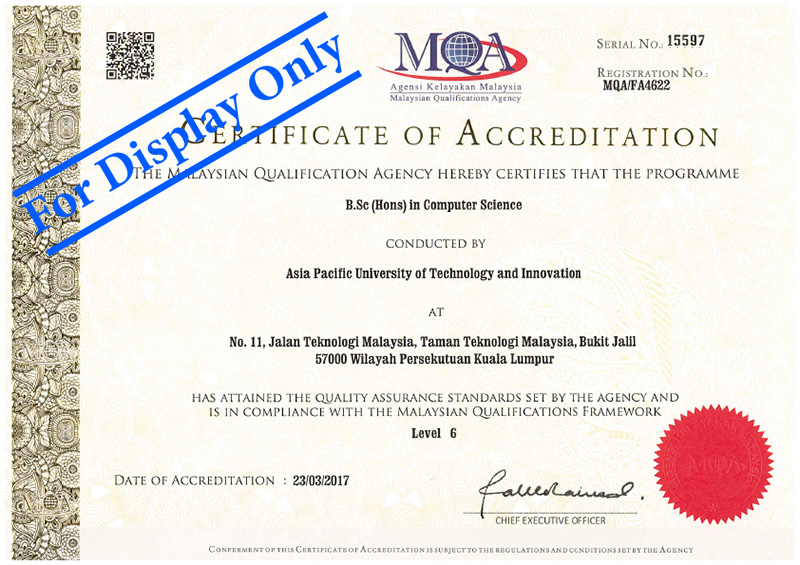
Programme code : (R2/0613/6/0055)(06/29)(MQA/FA4622)
All information is correct at the time of publication, but is subject to change in the interest of continuing improvement.
Note : All fees are payable in Ringgit Malaysia (RM). Any USD amounts indicated by APU are for reference only and are non-binding. The final amount payable is the RM amount stated in the official invoice, and the University will not entertain any claims arising from foreign exchange fluctuations.

Open Day
Learn More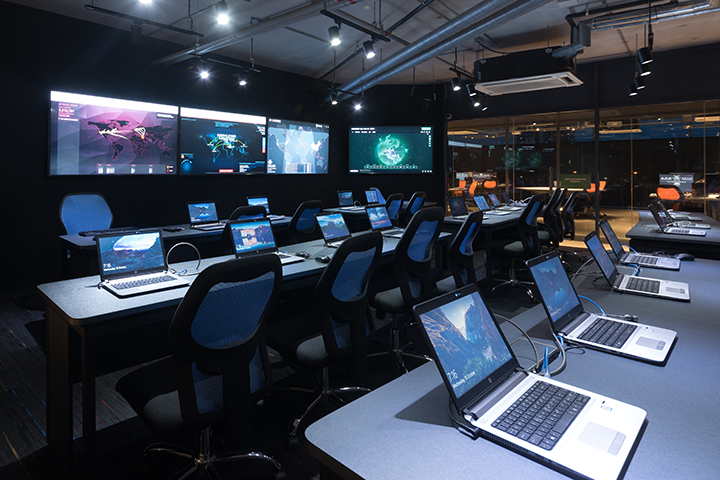
Campus Facilities
Learn MoreEnglish Language Study
Korean Language
U-Start Programme
Want to know more ?
Let’s Connect