At an industry lecture hosted by Asia Pacific University of Technology & Innovation’s (APU) School of Computing (SoC), Mr Syariffudin Sapri from Napier AI explained that successful artificial intelligence (AI) testing relies on solid engineering fundamentals rather than hype, highlighting key applications like self-healing test suites while reassuring students that AI serves to assist, not replace, human engineering judgment.
Image
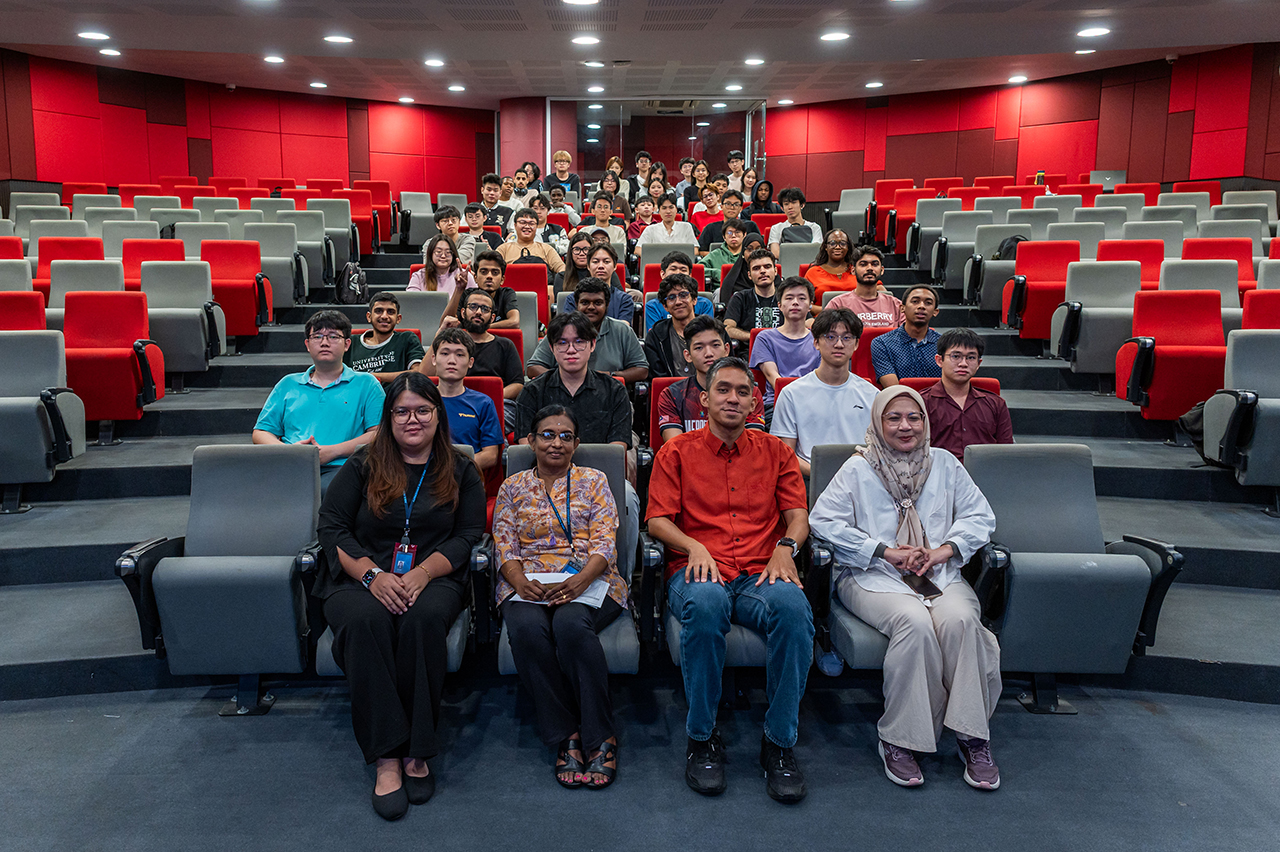
Recently, Asia Pacific University of Technology & Innovation’s (APU) School of Computing (SoC) hosted a captivating industry guest lecture titled ‘AI-Driven Testing – Trends and Future Insights’.
Organised by Ms Sarimah Samsudin alongside Associate Professor Dr Vinothini Kasinathan and Ms Vasugi Jayamangalam, the session provided computing and software engineering students with an eye-opening look into how artificial intelligence (AI) was actively reshaping quality engineering, test automation, and the modern software delivery lifecycle.
The highlight of the event was a feature presentation by Mr Syariffudin Sapri, Staff Automation Engineer from Napier AI, who brought extensive real-world software engineering experience to the stage.
Drawing from his work at the cutting edge of AI-driven systems, Mr Syariffudin unpacked the operational realities, technical breakthroughs, and common pitfalls of embedding artificial intelligence into enterprise testing pipelines.
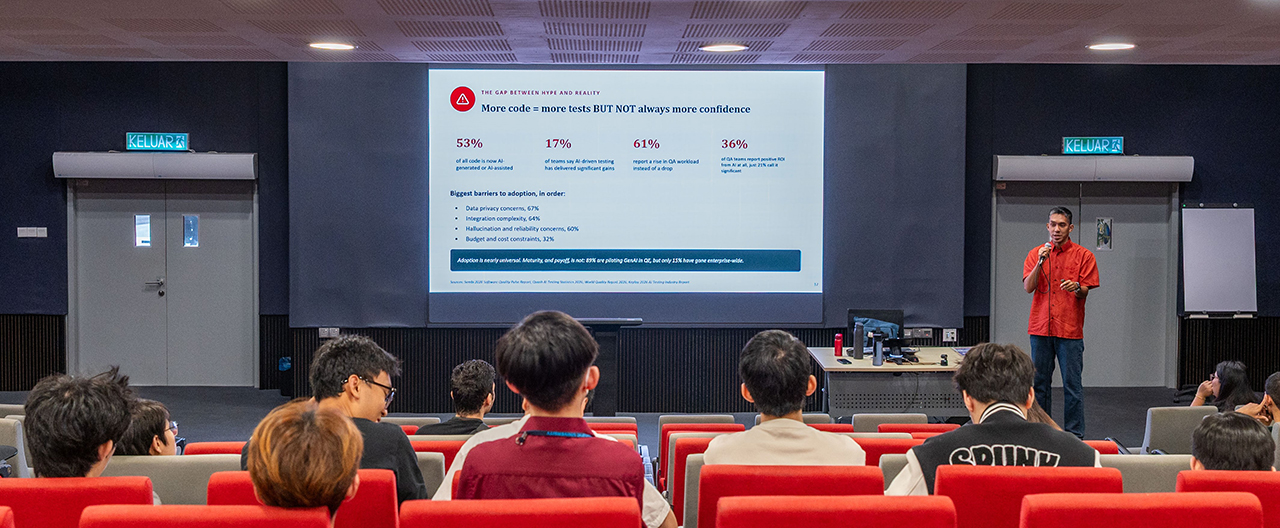
Opening the session by separating relentless industry hype from ground-level reality, Mr Syariffudin noted that whilst adoption was surging — with 94 per cent of teams incorporating AI into their testing workflows and 53 per cent of all code now being AI-generated or assisted — generating more tests did not automatically yield higher software confidence.
Pointing to recent industry research, he revealed that 61 per cent of teams actually reported an increase in quality assurance workload rather than a reduction, whilst a mere 36 per cent saw a positive return on investment.
He systematically addressed the primary hurdles confronting modern engineering teams, including data privacy risks, integration complexity, AI hallucinations, and persistent tooling constraints.
He explained that whilst 89 per cent of organisations were actively piloting Generative AI in quality engineering, only 15 per cent had successfully scaled it enterprise-wide, demonstrating that mature implementation required rigorous engineering fundamentals rather than blind technology adoption.
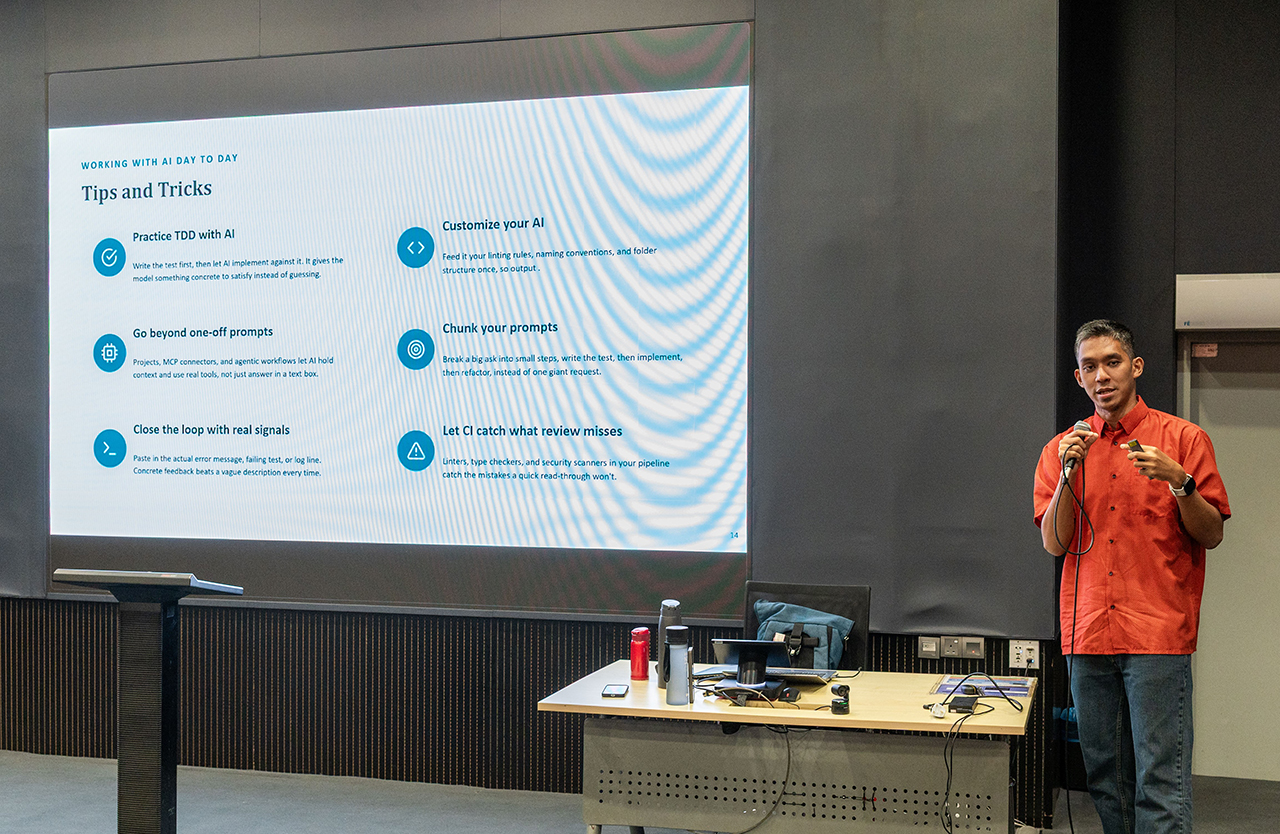
Moving into practical applications, Mr Syariffudin mapped out the four key areas where AI delivered tangible engineering value: visual regression testing, automated log translation, intelligent test selection, and self-healing test suites.
Using platforms such as Applitools and Percy, AI algorithms could flag genuine user-interface shifts across builds whilst ignoring harmless dynamic noise, delivering up to 67 per cent faster detection than manual visual reviews.
Similarly, in environments where test suites produced thousands of noisy log lines, AI-assisted observability tools in platforms like Datadog, Splunk, and New Relic acted as automated filters that translated complex stack traces into plain-language summaries.
Furthermore, when paired with robust frameworks like Playwright, Cypress, or Selenium, AI-driven self-healing selectors reduced broken tests per release by 35 to 50 per cent.
Nevertheless, Mr Syariffudin underscored a vital rule for the audience, reminding them that artificial intelligence accelerates good structure, but can never fix bad structure.
In his concluding segment, Mr Syariffudin spoke directly to students preparing to enter the technology sector, offering invaluable advice on navigating an AI-augmented job market.
He stressed that foundational software engineering principles remained paramount, as developers could not evaluate whether an AI suggestion was flawed without understanding core design patterns and test architecture.
He advised students to treat every AI output as a rough draft that required critical human verification before entering a delivery pipeline.
He added that effective prompt engineering had evolved from a niche perk into a baseline industry expectation, encouraging future engineers to master the existing ecosystems deployed by their target teams rather than chasing every emerging tool.
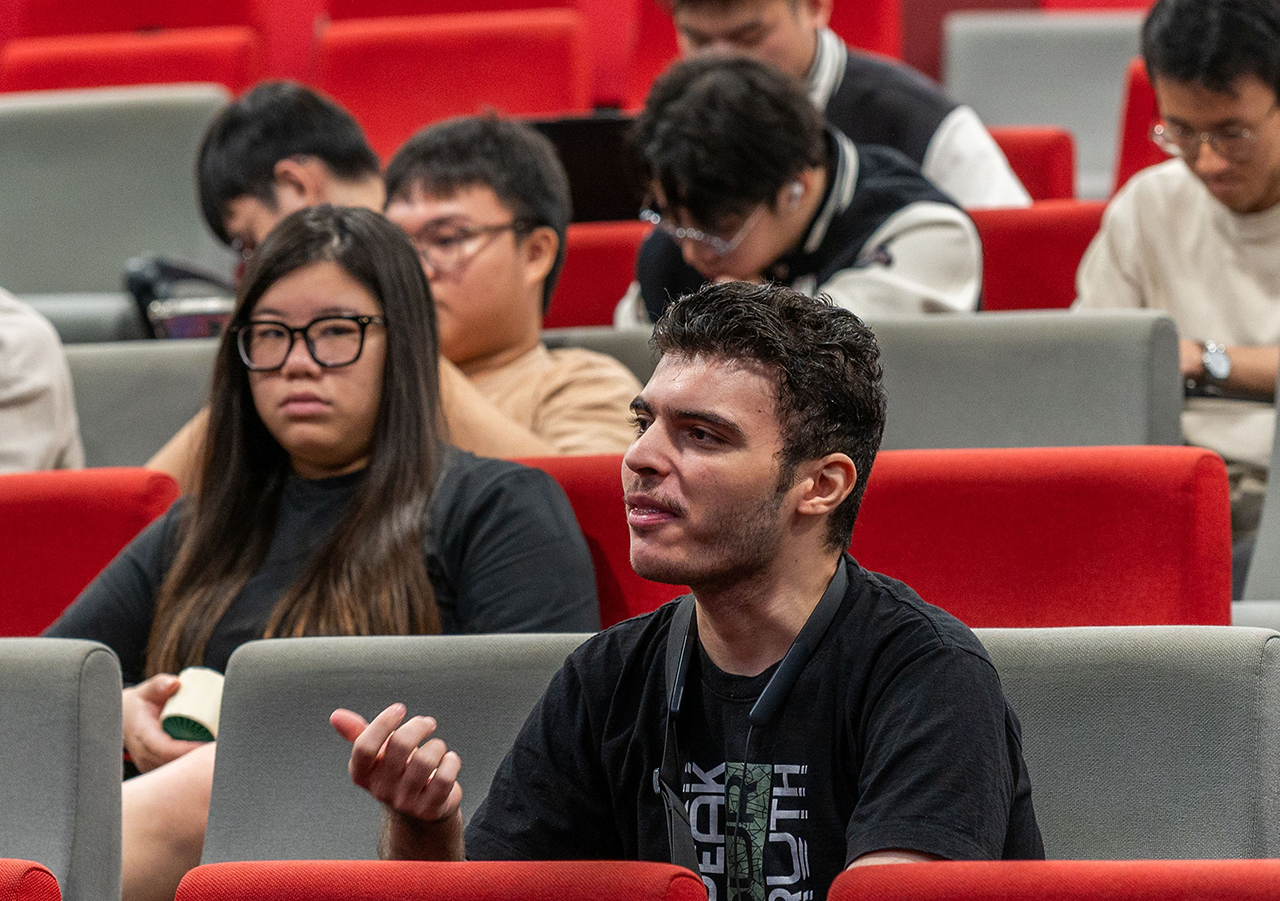
The lecture culminated in a vibrant interactive session where students pressed Mr Syariffudin on crucial career questions.
When asked whether artificial intelligence would replace quality assurance engineers, he reassured the audience that AI served as an efficiency amplifier rather than a wholesale replacement for human judgment, noting that domain expertise and strategic oversight remained indispensable.
Addressing how to verify AI-generated tests, he outlined robust verification strategies including mutation testing, negative test cases, and mandatory peer reviews to guard against hallucinations.
Finally, when asked which tools students should learn first, he recommended starting with general coding assistants to refine prompt design before advancing to specialized test-automation frameworks with built-in AI maintenance capabilities.
News & Happening
Download e-Brochures
Intake Calendar
Want to know more ?
Let’s Connect