Five students from APU’s School of Media, Arts & Design (SoMAD) — Lee Zhong Ming, Tanvir Saifullah Chowdhury, Low Mian Sheng, Ridzuan Haani Mohidin, and Muhammad Afiq Syakir Shaharuddin — won a Consolation Prize in the Young Designer Category at the MTIB-organised LAKAR’ 25 Wood Carving Furniture Design Competition, where APU stood shoulder-to-shoulder with other top finalist institutions, including Universiti Teknologi MARA (UiTM), Universiti Malaysia Kelantan (UMK), Universiti Teknologi Malaysia (UTM), and Universiti Sultan Zainal Abidin (UniSZA).
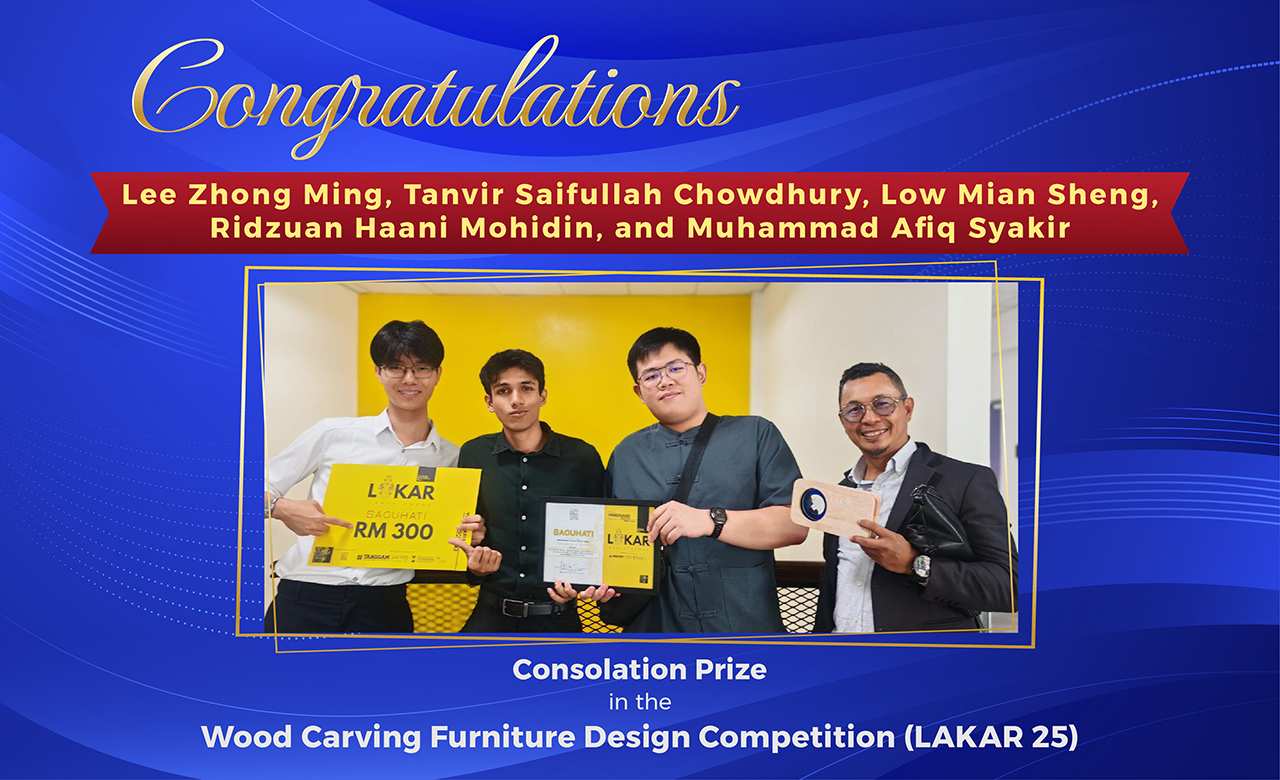
Demonstrating exceptional creativity and cultural reverence, a talented team of students from Asia Pacific University of Technology & Innovation’s (APU) School of Media, Arts & Design (SoMAD) secured a prestigious Consolation Prize in the Young Designer Category at the Wood Carving Furniture Design Competition (LAKAR’ 25).
The team from Industrial Design programme — comprising Lee Zhong Ming, Tanvir Saifullah Chowdhury, Low Mian Sheng, Ridzuan Haani Mohidin, and Muhammad Afiq Syakir Shaharuddin —impressed the judges with their striking furniture concept, titled ‘Kirana’.
LAKAR 2025/2026 was organised by the Malaysian Timber Industry Board (MTIB) in collaboration with Universiti Malaysia Kelantan (UMK), Tanggam Design Centre, and Peraka Malaysia to celebrate and elevate the traditional art of local wood carving.
Designed as a premier platform for both local and international designers, the competition challenged emerging talents to reimagine furniture through Malaysia’s rich timber resources, cultural heritage, and contemporary design principles.
The competitive journey began on 31st October 2025, culminating on 5th January 2026 when five university finalists were selected to produce scale prototypes under the Young Designer Category.
APU stood shoulder-to-shoulder with top institutions, including Universiti Teknologi MARA (UiTM), Universiti Malaysia Kelantan (UMK), Universiti Teknologi Malaysia (UTM), and Universiti Sultan Zainal Abidin (UniSZA).
Unlike the Professional Designer Category where numbered placements were awarded, the organisers designated all top five finalist university projects — Kirana, The Whisper of Melur, Ukir, Slinq, and Seruni Console — as equal Consolation Prize winners, recognising the exceptional caliber across the young student talent pool.
Reflecting on the outcome, APU’s SoMAD Senior Lecturer, Mr Saifullizan Abdul Wahab, congratulated the team on their achievements.
“Even though our team did not secure a first-place title, as the organisers awarded all top five finalists a shared consolation prize, reaching this level is a massive achievement in itself,” he said.
He added, “Only the professional category received ranked placements, but our students proved that their design language, craftsmanship, and concept execution are fully on par with industry standards.”
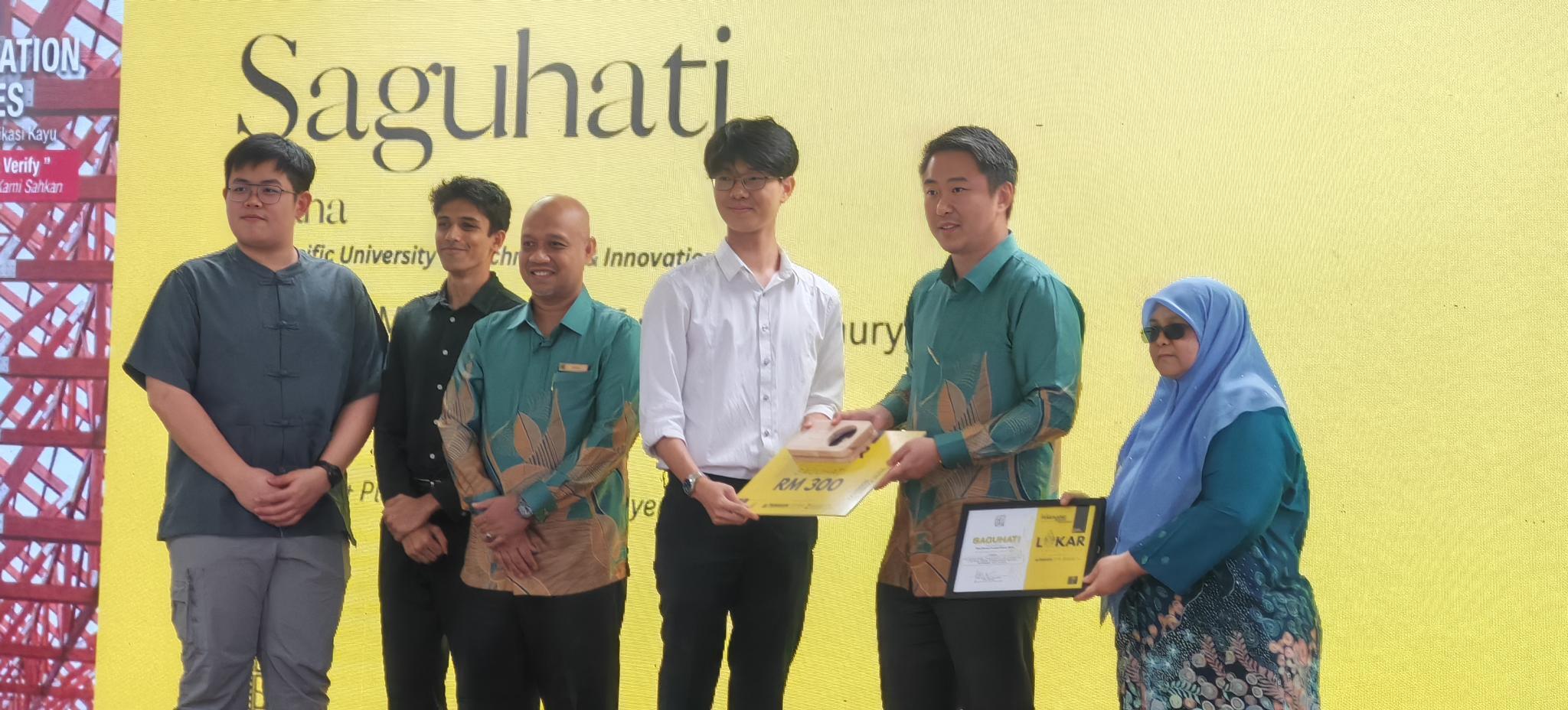
The winning teams were celebrated at a grand prize-giving ceremony in August 2026, where the Chairman of the Malaysian Timber Industry Board (MTIB), Datuk Larry Sng Wei Shien, personally presented the mock cheque to the delighted Kirana team.
Where heritage meets modern functionality
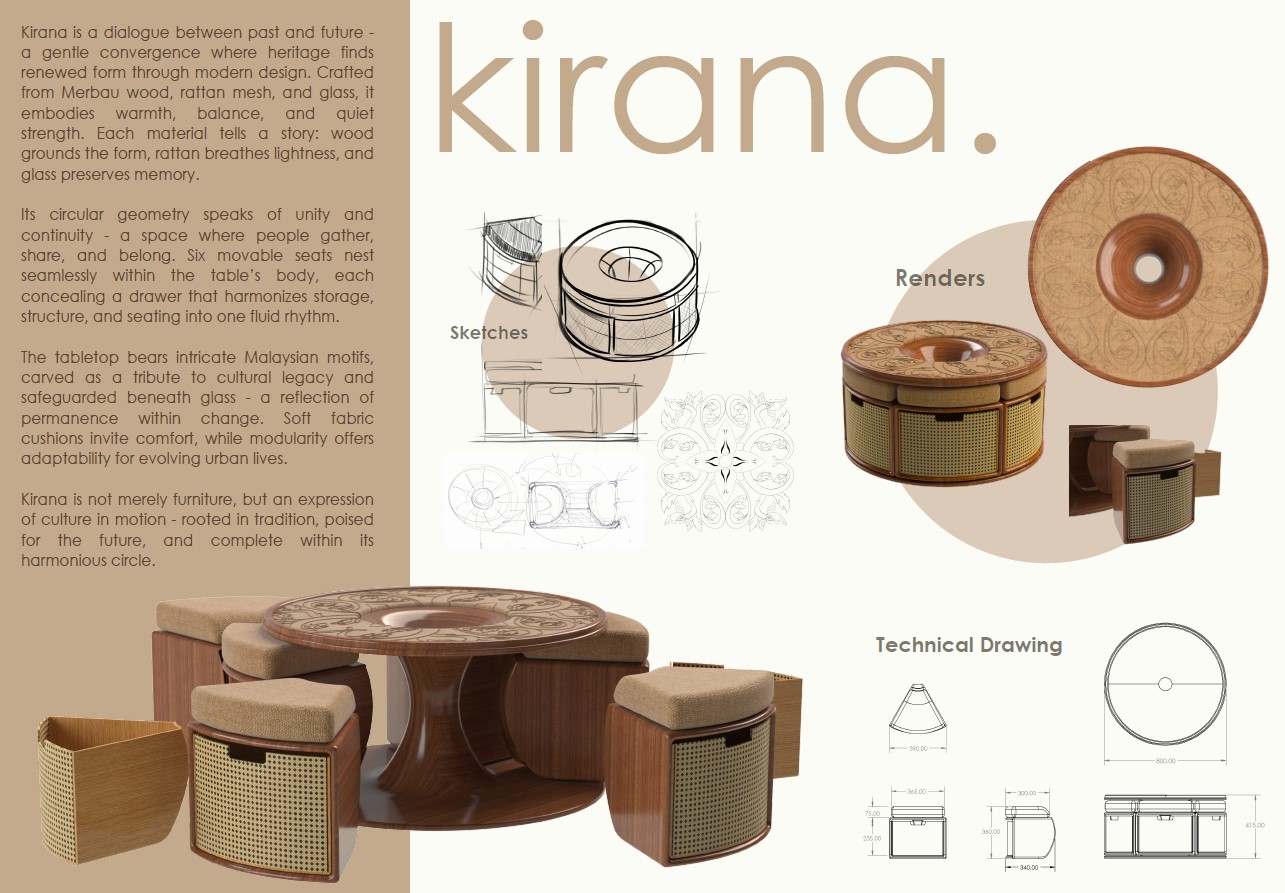
Crafted from premium Merbau wood, rattan mesh, and sleek glass, Kirana was envisioned as a living dialogue between traditional legacy and contemporary living.
Each material was chosen with deep intention: the solid wood grounded the piece with quiet strength, the woven rattan introduced breathability and lightness, and the clear glass protected the artistry beneath.
The design featured a harmonious circular geometry symbolising unity and continuity. Nestled seamlessly beneath the table’s main body were six modular seats, each cleverly engineered with a concealed storage drawer; blending seating, structure, and storage into one fluid rhythm tailored for modern urban spaces.
Soft fabric cushions added warmth and comfort, while the tabletop showcased intricate, hand-carved Malaysian motifs preserved beneath glass.
Speaking on behalf of the group, team representative Lee Zhong Ming shared the philosophy behind their creation.
“Through Kirana, we wanted to create a poetic convergence between the past and the future where heritage finds renewed form through modern design,” explained Zhong Ming.
“Every element tells a story. The intricate Malaysian carvings beneath the glass serve as a tribute to our cultural legacy, safeguarded as a reflection of permanence within a constantly changing world and winning this award validates our belief that traditional craftsmanship has a crucial place in modern, adaptable furniture design.”
Despite their impressive output, the accomplishment was particularly remarkable given that it was the team’s first foray into the domain.
“This was the first time that all of us had participated in a furniture design competition, as well as in the Young Designer category,” Zhong Ming revealed.
“It was a completely new experience for the entire team, and we saw it as an opportunity to challenge ourselves beyond our usual academic projects.”
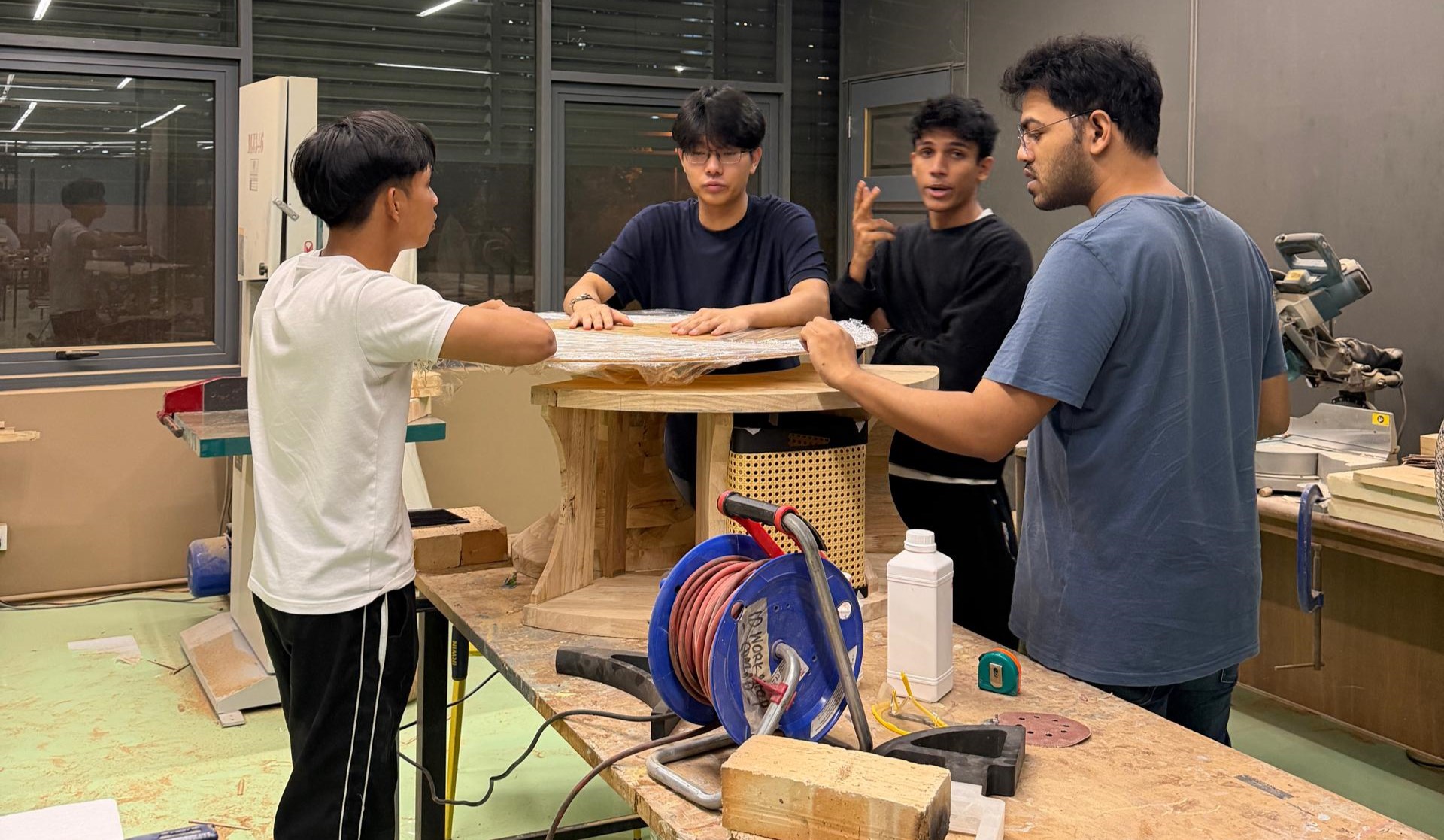
What followed was an exhaustive period of hands-on fabrication involving cutting, fitting, gluing, sanding, and finishing, a feat made even more demanding as it coincided with their Final Year Projects in the middle of their final semester.
“All of us were determined to give the project our best effort. Since we were already investing so much time and energy despite our other academic commitments, we did not want to present something that felt incomplete.
“That motivation pushed us to keep refining the prototype until we were truly satisfied with the final result.”
Beyond mastering woodworking and power tools, the experience forged an enduring bond among the students.
“One of the most important things we learned was how to work effectively as a team under pressure. When one team member was tired, others would step in to cover their tasks. I believe this mutual support was a major factor in our success.”
He added that turning digital models into a fully functional piece of furniture fulfilled a personal goal for many on the team while bridging classroom theory with real-world industry demands.
“The competition provided practical experience in fabrication, structural considerations, and tight-deadline problem solving that complemented our academic foundation.
“It exceeded our expectations, and after seeing what we can achieve together, we would definitely take on similar challenges in the future.”
The accolade highlights APU SoMAD’s Industrial Design programme ongoing commitment to fostering innovative, industry-ready designers who honour cultural roots while pushing the boundaries of contemporary design.
News & Happening
Download e-Brochures
Intake Calendar
Want to know more ?
Let’s Connect