More than 90 undergraduate and postgraduate students from APU’s School of Marketing & Management (SoMM) gained valuable industry insights from Canon Opto (Malaysia) Sdn. Bhd. on how technology, ESG and sustainable innovation are shaping responsible business practices through expert sharing sessions and a live wastewater treatment demonstration.
Image
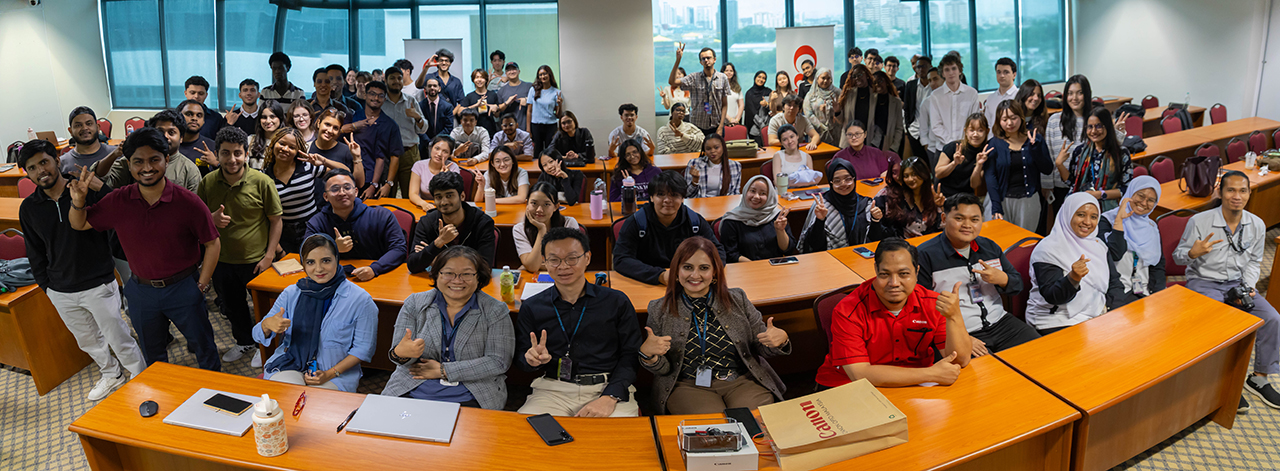
Sustainability came to life at Asia Pacific University of Technology & Innovation (APU) as more than 90 undergraduate and postgraduate students from School of Marketing & Management (SoMM) gained first-hand insights into how technology, innovation and responsible leadership are shaping a greener future.
The industry engagement titled ‘Innovating for a Sustainable Future: How Technology Drives Environmental Impact’, led by Senior Lecturer and Industry Advisory Panel Coordinator, Ms Harjinder Kaur, connected students with experts from Canon Opto (Malaysia) Sdn. Bhd., providing a practical perspective on how sustainability is integrated into modern manufacturing and business strategy.
Representing Canon Opto (Malaysia) were Mr Al Rashid Wahab, Manager of the Environment Facilities Services Department; Ms Khairun Farina Khalid, Assistant Manager of the Environment Facilities Services Department; and Mr Muhammad Salihin Mohd. Hidzir, Engineer of the Environment Facilities Services Department.
Students from Digital Marketing, International Business Management, Human Resource Management, E-Business, Business Management and International Business Communication explored how environmental responsibility, innovation and technology work hand in hand to address global sustainability challenges.
The session began with Mr Al Rashid, who highlighted that sustainability had evolved beyond a corporate obligation into a strategic business imperative.
He explained how organisations increasingly balanced financial performance with Environmental, Social and Governance (ESG) goals, demonstrating that responsible leadership — not technology alone — was the driving force behind meaningful environmental change.
Students gained a deeper appreciation of sustainability as a long-term business strategy that strengthened organisational resilience, enhanced corporate reputation and supported the United Nations Sustainable Development Goals (SDGs), particularly Responsible Consumption and Production (SDG 12) and Climate Action (SDG 13).
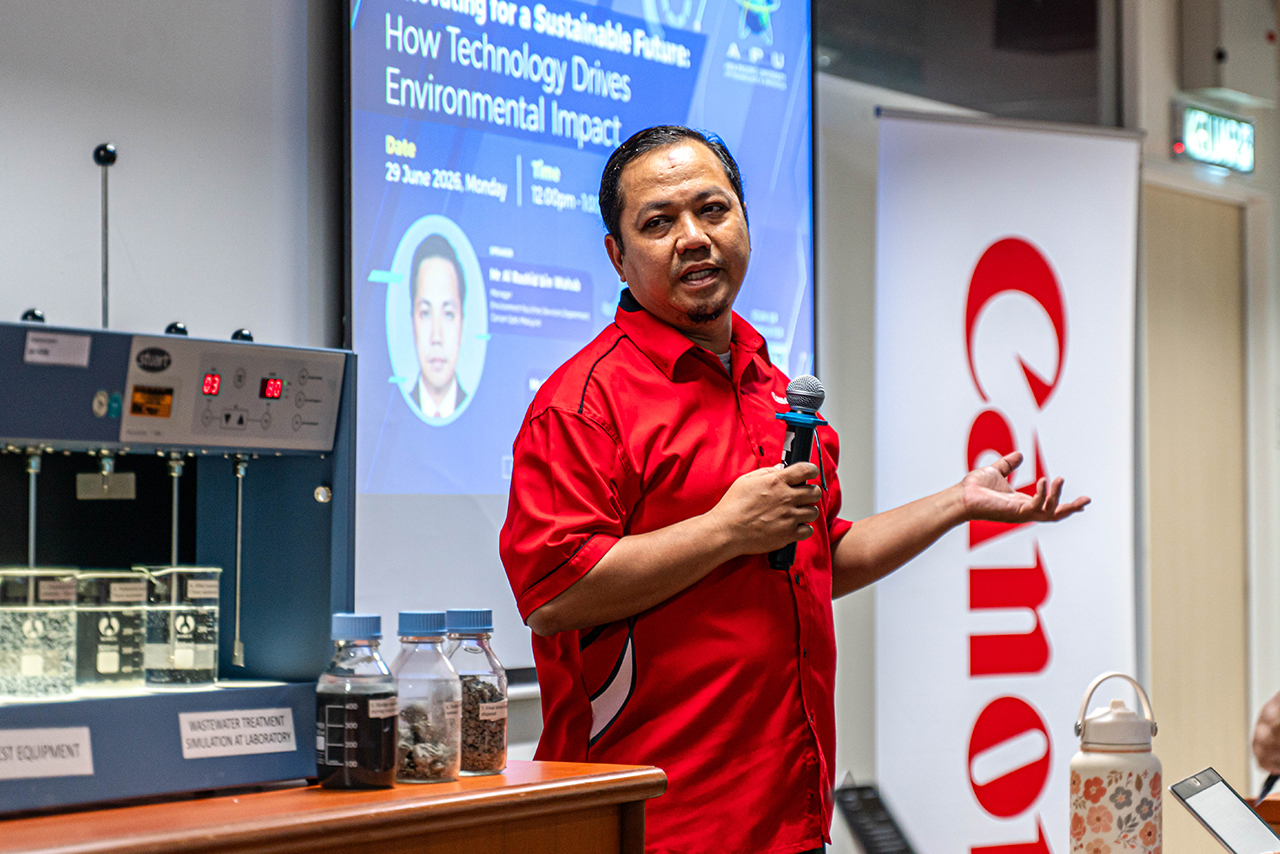
Building on this foundation, Ms Khairun Farina showcased how Canon translated its corporate philosophy of Kyosei — living and working together for the common good — into measurable environmental initiatives.
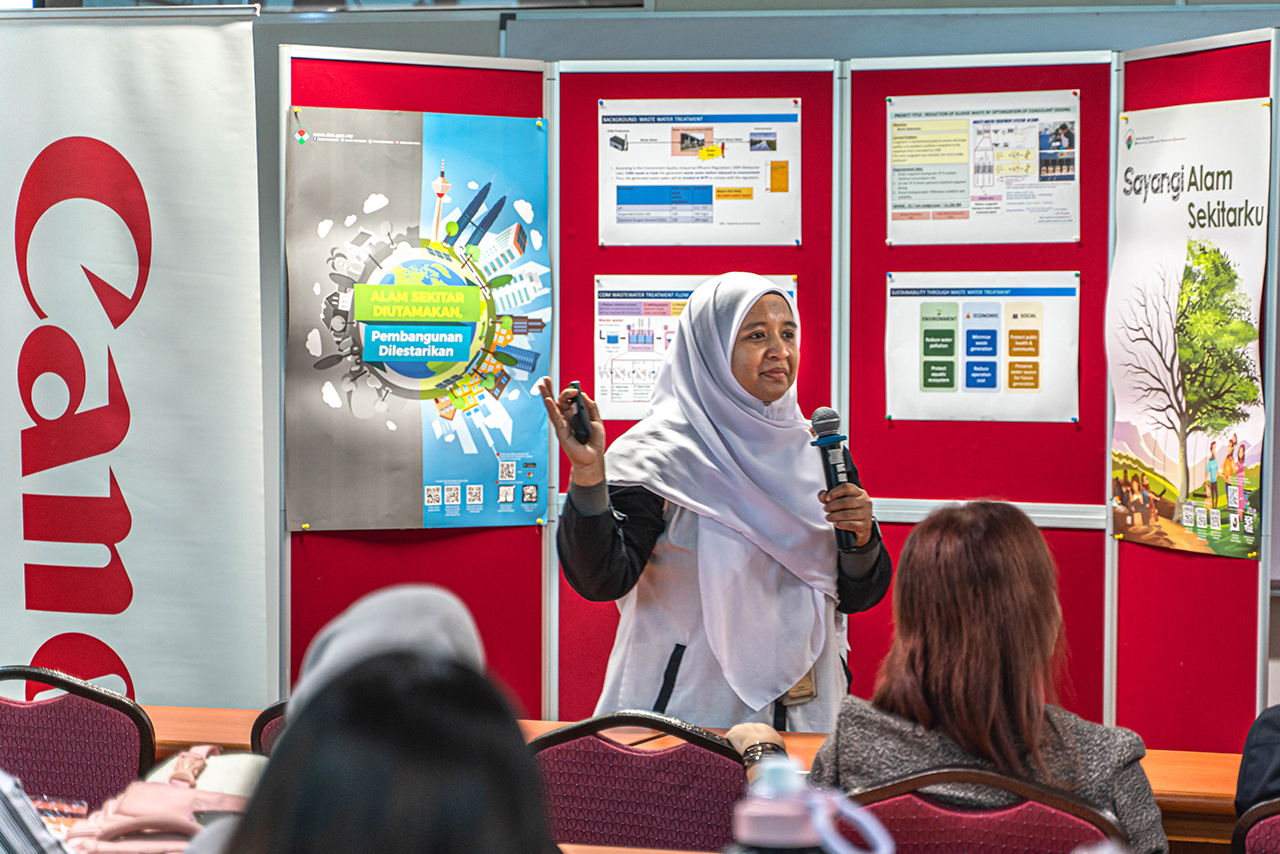
Among the highlights were the company’s adoption of solar energy, a 13 per cent reduction in industrial sludge that generated cost savings while reducing pollution, and innovative manufacturing practices such as energy-efficient toner technology, eco-friendly packaging and waste solidification for recycling.
These initiatives demonstrated that sustainability and profitability could complement one another, while supporting several global goals, including Affordable and Clean Energy (SDG 7), Industry, Innovation and Infrastructure (SDG 9), Responsible Consumption and Production (SDG 12), and Climate Action (SDG 13).
The session concluded with one of the day’s highlights — a live wastewater treatment demonstration conducted by Mr Muhammad Salihin.
Using a Jar Test simulation, he illustrated how engineers determined the precise chemical dosage required to treat industrial wastewater efficiently, preventing unnecessary chemical use while ensuring compliance with environmental standards.
The demonstration provided students with a practical understanding of how scientific processes safeguarded water quality and contributed to Clean Water and Sanitation (SDG 6).
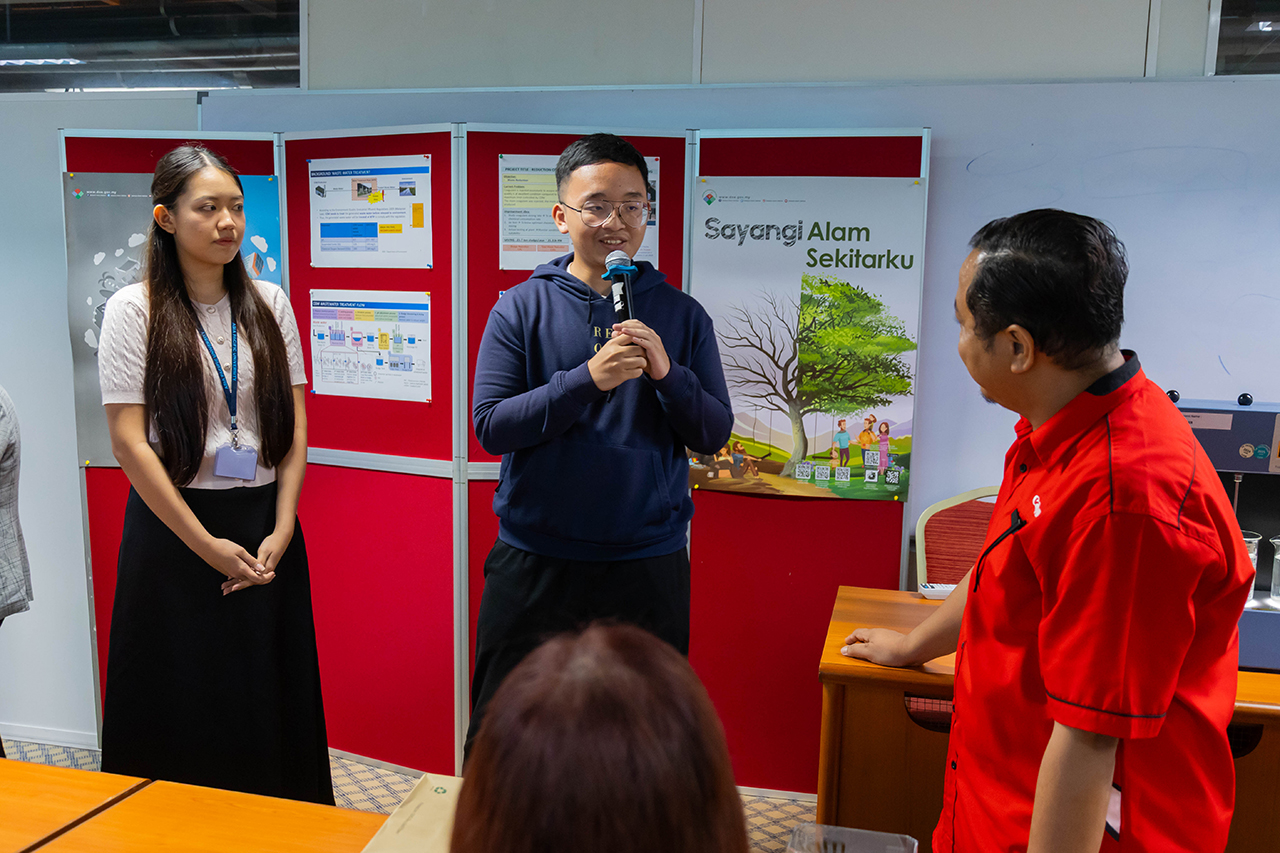
The industry sharing sparked enthusiastic participation throughout the session. During the interactive question-and-answer segment, students engaged the Canon representatives on topics ranging from balancing sustainability investments with profitability to implementing ISO standards and communicating green initiatives effectively to consumers.
Students who posed insightful questions received exclusive Canon-branded notebooks in recognition of their participation.
Head of SoMM, Associate Professor Dr Devinder Kaur, stated APU aims to empower students to harness technology not only as a driver of innovation but also as a force for environmental stewardship.
“By integrating sustainable thinking with technological advancement, students can develop solutions that reduce environmental impact, optimise resources, and create a more resilient and sustainable future for our communities and the world.”
Head of Entrepreneurship & Innovation, Dr Beh Ching Yew, added that industry collaborations provided students with valuable real-world perspectives that encouraged responsible innovation.
“By engaging with industry partners like Canon Opto Malaysia, we inspire our students to become future leaders who are not only technologically competent but also environmentally responsible.”
Meanwhile, Ms Harjinder Kaur emphasised that direct engagement with industry transformed classroom concepts into practical learning experiences.
“When future business leaders witness how engineering innovation and responsible management work together to protect the environment, they realise sustainability is not simply a strategic choice. It is a responsibility.”
Digital Marketing student Reshika Ravichandran said Canon’s sustainability initiatives demonstrated that manufacturers could achieve operational excellence while remaining environmentally responsible.
Business Management student Myat Mon Aung found the live wastewater treatment demonstration particularly insightful, describing it as proof that environmental protection also made sound business sense.
E-Business student Dzaky Sammy Aushaf added that the session reinforced how customers increasingly valued brands with strong ethical and sustainability commitments.
Following the session, the Canon delegation toured APU’s state-of-the-art campus facilities, guided by Dr Beh Ching Yew and Ms Harjinder Kaur.
The visitors commended APU’s advanced learning environment and innovation ecosystem, recognising the University’s commitment to preparing graduates for the evolving demands of industry.
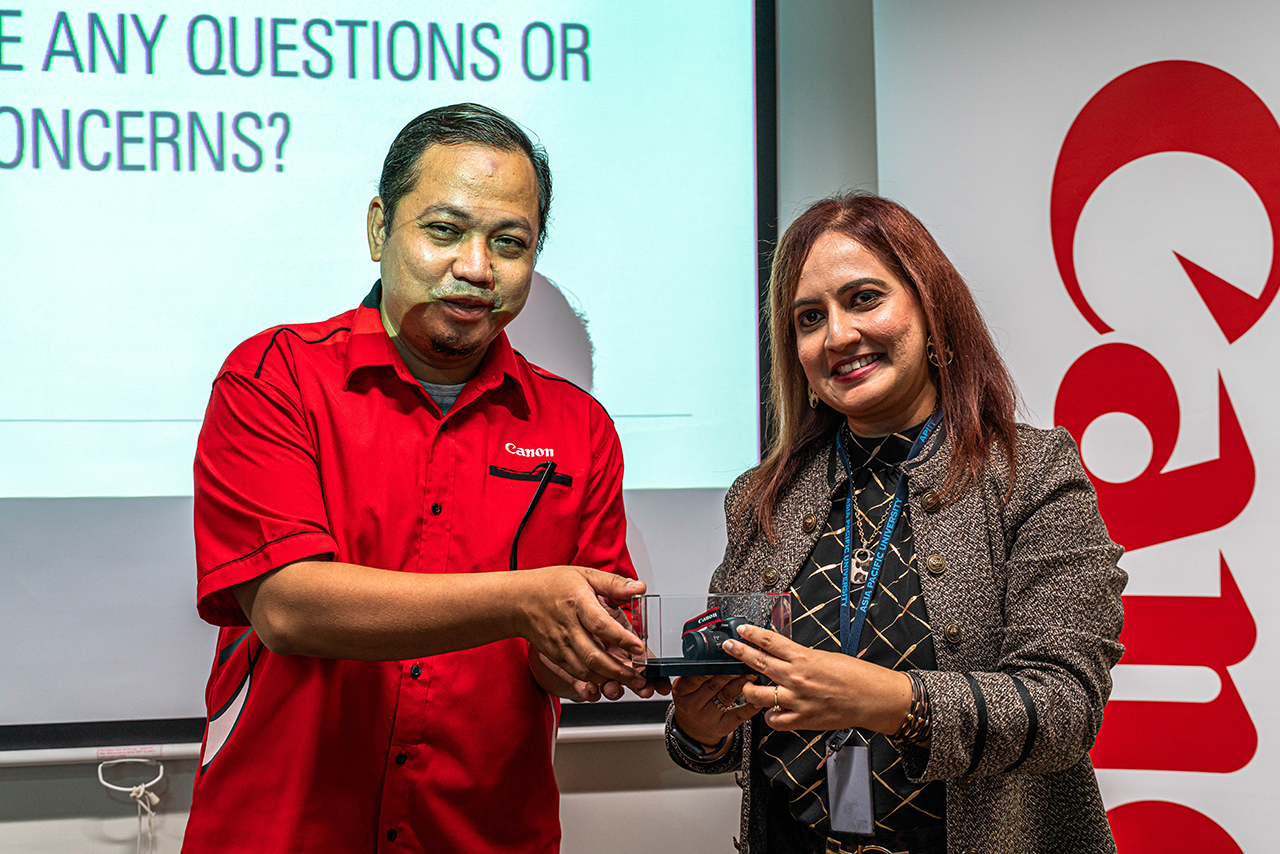
The industry engagement concluded with a token of appreciation presented by Canon to APU, symbolising the strong partnership between academia and industry.
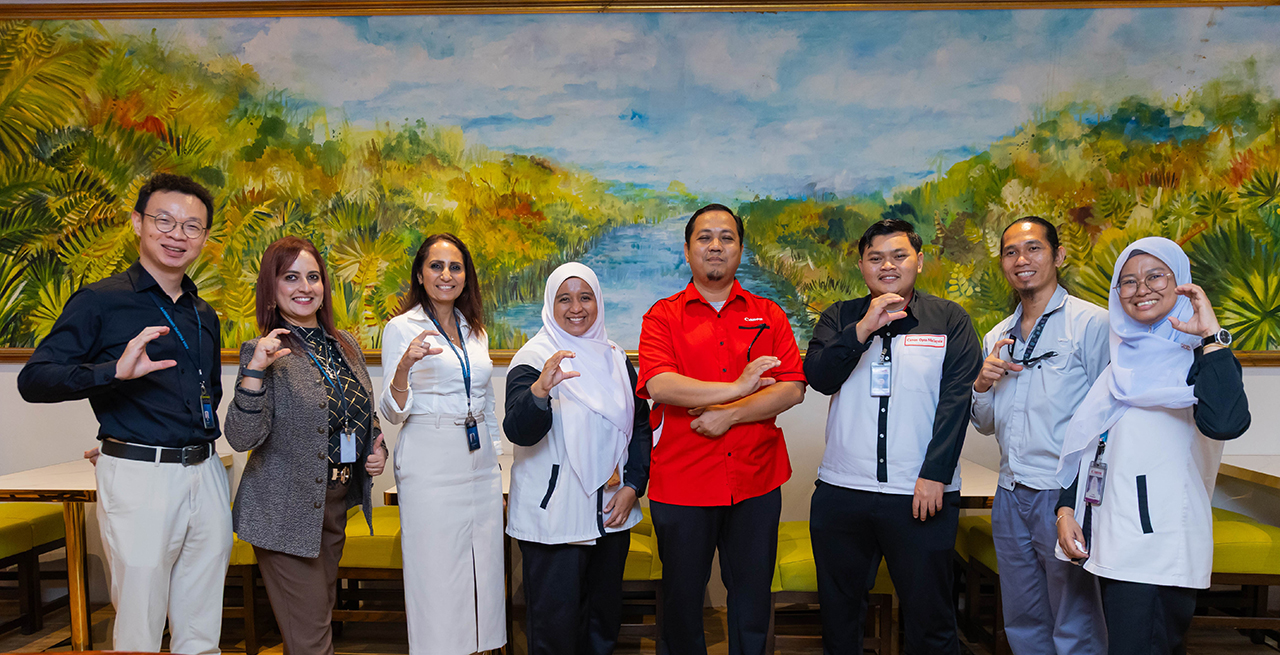
A group photograph featuring both organisations, complete with Canon’s signature ‘C’ hand gesture, marked the successful engagement.
By combining industry expertise, practical demonstrations and meaningful dialogue, the session successfully bridged the gap between academic learning and real-world application.
More importantly, it strengthened APU’s commitment to developing graduates who are equipped to lead sustainable innovation and create lasting environmental impact.
News & Happening
Download e-Brochures
Intake Calendar
Want to know more ?
Let’s Connect